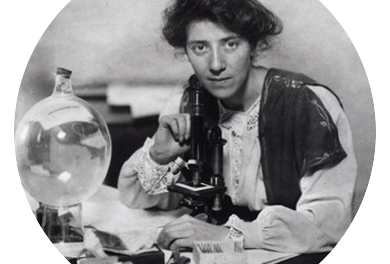
Welcome to the Steppe Sisters takeover of TrowelBlazers! This week, we will be highlighting women archaeologists, palaeontologists, and ethnographers from the Russian (and in one case, German) speaking world. Often the contributions of these women are well known within their own sphere, but are overlooked outside of it.
It is well known that there is a lack of connection between academics from the countries of the former Soviet Republics and Europe and North America. Steppe Sisters is a networking group that is specifically for women archaeologists to connect and support each other to create new links across this divide. Founded in 2017 as an informal network, it is an online forum where women can ask for advice and support with academic questions, find funding and resources, and ask for help on how to manage cultural differences in each sphere.For example: How do you write a professional email in Russian? How can you find an advisor in Europe? We have nearly 75 members and are still growing, and are open to any archaeologists who identify as women that work in countries in Central Asia, the Caucasus, Eastern Europe, Russia, Mongolia, and China.

Map highlighting the Eurasian Steppe
Research within these regions is not well known by Western scholars, and is often looked down upon due to the perceived impact of Marxism on the academic world of Russia and its satellites during the twentieth century. However, the Russophone academic world, which includes much of Central Asia, Mongolia, Russia, and in some cases, parts of Eastern Europe, has a well developed scholarly tradition that stretches back to the eighteenth century and was heavily influenced by deep links with Prussian, and later, German thought. Archaeology prior to the Russian Revolution of 1917 was focused upon three main regions: Classical (Greek and Roman) contexts around the Black Sea, the medieval Rus settlements of greater Russia, and the interactions of the Central Asian and Near Eastern steppe. It was during the second half of the nineteenth and beginning of the twentieth century that archaeology began to be codified and was investigated under a number of different disciplinary umbrellas, including history, ancient history, ethnography, epigraphy, and oriental studies. Before the First World War and the Russian Revolution, the Moscow Archaeological Society and the Russian Archaeological Society were the major institutions which advanced archaeological research across the region, with centralised control for archaeological excavation across the Russian Empire: the Imperial Archaeological Commission. The commission was founded in 1859 and its practices formed the basis of the modern regulation of archaeological research and the system of protection of monuments in Russia. Following the revolution, the Russian Academy of the History of Material Culture in the Academy of Science (RAIMK in Russian, later renamed and abbreviated GAIMK) was founded in 1919 and took over the functions of the Archaeological Commission and still exists today. Politically, there was a new focus on the history and archaeology of subalterns in the past, such as the role of slavery in Near Eastern and Classical contexts, which both stemmed from and contributed to Lenin’s view of the linear development of history.
Other centers for archaeological research expanded after the Second World War in Moscow, Leningrad and regional centers, such as Samarkand. It was during the postwar period that archaeology had a true fluorescence, with increasing integration of new scientific and methodological techniques, such as the use of dendrochronology for absolute dating. Many major excavations were conducted during this period, including the Chorasmian Archaeological-Ethnographic in Karakalpakstan in Uzbekistan, the South Turkmenistan Comprehensive Archaeological Expedition (YuTAKE) and multiple excavations in the North and South Caucasus. These, as well as many other innumerable articles, books, and talks were all part of a well formed Russian-speaking research community that in many ways paralleled its Western counterpart but had its own unique identity. While the impact of Marxist and Leninist thought is undeniable, especially in the interwar period, these theoretical frameworks also had large impacts on archaeological thought in the West. In the Soviet context, despite the ever-present theoretical concerns, the field of material culture studies was far more robust, and more diverse, than is often perceived.
The end of the Soviet Union marked a new chapter in the archaeology of the steppe that brought new challenges to academic research. The Russophone infrastructure that united this space frayed. Financial stresses limited the development of new academic research infrastructure and training opportunities in newly independent countries, and led to acute challenges for scholars old and young. But, as with all seismic change, this has also created opportunities for new voices and new forms of collaboration.
Many of the trowelblazers highlighted this week belonged to the postwar generation, and were leaders in archaeology. They often held prominent roles in their departments and wrote seminal works that formed the basis for archaeological and scientific thought. Yet, this is not ais not a comprehensive list; women scientists made critical contributions in many related spheres, such as our highlighted palaeontologist, Baldyrgan Kozhamkulova. Beyond calling attention to these fascinating women and their scientific contributions, we hope that these profiles give TrowelBlazers readers a taste of the richness and diversity of scholarship in the Russian-speaking world. Our biographies this week are all written by Steppe Sisters- women who work in and research on the world of Central Asia. Interested in learning more? Join us on Facebook or reach out to us on Twitter.
Post by Ashleigh Haruda, @AHaruda
—
Galina Anatolevna Pugachenkova
Baldyrgan Seralievna Kozhamkulova
—
Interested to learn more about the development of Russian speaking archaeology? Check out this open access chapter by one of our members:
Fabian, L. (2019) “Russian Perspectives on Eurasian Pasts.” In Handbook of Ancient Afro-Eurasian Economies, ed. S. v Reden. 581–618 (De Gruyter Oldenbourg). doi:10.1515/9783110607741-022.
Public domain map from Wikimedia Commons; photo by S. Pilaar Birch, 2011.