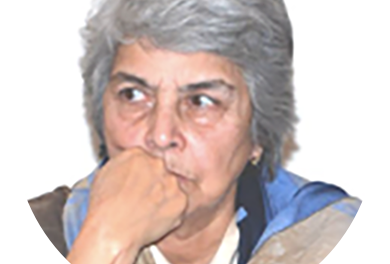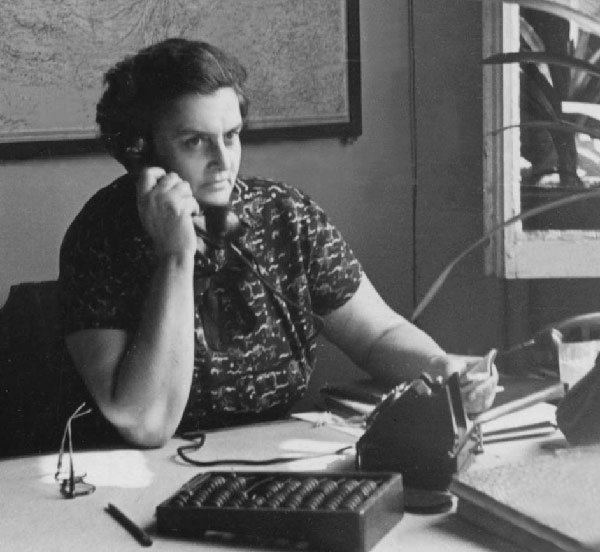
Dr. Tatyana Alexandrovna Zhdanko, a Soviet researcher born in what is now Ukraine, focused on the archaeology and ethnography of Central Asia, in particular the Karakalpak region of Uzbekistan. She always considered archaeology and ethnography to be deeply entwined and was particularly focused upon the construction and lifeways of pastoralism around oases, both in the past and the present. She acquired her first degree from the historical-ethnological faculty at the Moscow State University, graduating in 1930. Following this, in 1931, she travelled to the Central State Museum in Samarkand, Uzbekistan. It was during this time that she first visited the region of Karakalpakstan in Uzbekistan for the first time, a region which would be the focus of the rest of her research career. After numerous field expeditions, she moved to head the Uzbekistan Department at the Museum of the USSR Peoples in Moscow, from 1936-1941. During the Second World War (known as the Great Patriotic War in Russia) she, her mother, and her twin daughters were evacuated to Chebalyinsk province before returning to Uzbekistan in 1942 where she remained until the retreat of German forces from much of Russia in 1944 made it safe to return to Moscow.
Upon her return she began her graduate studies under S.P. Tolstov at the Institute of Ethnography of the USSR Academy of Sciences and she defended her first (Candidate) thesis on this historical ethnography of the Karakalpaks in 1947 and her second (Doctoral) thesis in 1964. She remained at the Institute of Ethnography for the remainder of her career, rising to the head of the Central Asia and Kazakhstan Department in 1953. She continued to conduct ethnographic and historical research on the current and past populations of Central Asia and Kazakhstan, and for 15 years led the Karakalpak ethnographic expedition alongside her previous supervisor, Prof. Tolstov. Her numerous published works, including the pivotal “Peoples of Central Asia and Kazakhstan” (v. 1-2, 1962-1963), have been instrumental in the dissemination of ethnographic knowledge about Central Asia populations. She was a member of the editorial board of the journal ‘Soviet Ethnography’ and in 1981, she participated in the preparation of the publication “Modern Ethnic Processes in the USSR” for which she was awarded the State Prize. She supervised over a dozen doctoral dissertations within her institute and continued her work until a few days before her death. A letter from this time that she wrote to her colleagues highlighted her dedication to the field and her students and her passion for research:
‘Для меня самые счастливые годы моей жизни – совместная работа с каракалпакской молодежью, желание, чтобы они стали основателями каракалпакской этнографической науки.
Работая с ними многие годы, я радовалась появлению этой науки в республике. Всеми силами хотела способствовать этому от первых дней знакомства с аспирантами института и до последнего вздоха.’ -ТАТЬЯНА АЛЕКСАНДРОВНА ЖДАНКО, 12 апреля 2007 г.
—
‘For me, the happiest years of my life are joint work with Karakalpak youth, with the desire that they become the founders of Karakalpak ethnographic science.
Working with them for many years, I rejoiced at the appearance of this science in the republic. I wanted to promote it with all my might from the first days of acquaintance with post-graduate students of the Institute to the last breath.’ -Tatyana Alexandrovna Zhdanko, 12 April 2007
—
Post by Shevan Wilkin & Ashleigh Haruda
Image available under fair use on Wikipedia.