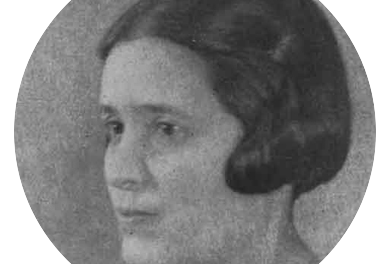
Johanna Mestorf was a 19th century German prehistoric archaeologist. She was the first woman archaeological director in the Kingdom of Prussia and the first female professor in Germany. She was born in 1828, well before women were eligible to be either academics or archaeologists there. Her archaeological training began in 1863, translating Scandinavian archaeological research into German where she was introduced to the typological categorization of artifacts by physical characteristics. This is where she first learned of the Three-age system (Stone, Bronze, Iron) that influenced her love of studying prehistory. Alongside linguistics she studied ethnography, archaeology, and Norse folklore. She famously coined the terms “Single Grave culture”(Einzelgrabkultur) for the Northern German and Southern Scandinavian region. She identified part of the Corded Ware culture, as well as “Bog body” (Moorleiche) for the human remains found in European bogs.
Regionally, she focused on Schleswig-Holstein, Germany’s northernmost state. Her work in Schleswig-Holstein prompted many archaeological sites to be investigated and carefully preserved with proper cataloging, documentation and artefact preservation (Hare 2015). She included public education on the importance of site and artefact preservation throughout her work which elevated her to an honorary post at the Kiel Museum. She also helped transform and rebuild the Schleswig-Holstein Museum, and eventually became director in 1881, making her the first woman museum director in Germany (Hare 2006).
Despite her successes and the recognition she received for her work in prehistory and ancient history of Scandinavia and northern Germany, she still experienced numerous setbacks in the advancement of her career. She was continually denied permission to attend formal university lectures at the University of Kiel and to pursue an accredited degree. Despite this, in 1880, the Prussian Ministry of Culture employed her for an anthropological exhibition in Berlin. Eventually, she was granted an honorary doctorate and professorship, becoming the first woman in Germany to earn a professorial title. She was a member of 19 scientific societies and awarded three national medals for her work. Upon her retirement, she was given a photograph signed by Emperor Wilhelm II recognizing her efforts in German science and archaeology. She died in 1909.
Today at Kiel University the Johanna Mestorf Academy (JMA) exists as an institution promoting research in the fields of societal, environmental and cultural change.
Post by Alexandra Slucky
References:
STEM Girls. “Johanna Mestorf.” Girl Museum Inc. March 12, 2015. https://www.girlmuseum.org/stem-girls-johanna-mestorf/
Hare, J. Laurence. “Excavating Nations: Archaeology, Museums, and the German-Danish Borderlands.” Toronto, University of Toronto Press, 2015.
Hare, J. Laurence. “Claiming Valhalla: Archaeology, National Identity, and the German-Danish Borderland, 1830-1950.” PhD Dissertation University of North Carolina at Chapel Hill. 2006.
Image by H. Schmidt: Johanna Mestorf. In: Prähistorische Zeitschrift. 1909. Available on Wikimedia Commons.