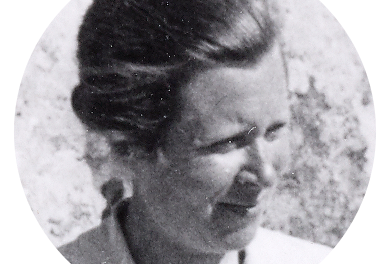
Shereen Ratnagar is an Indian archaeologist and author; Shereen’s work has contributed heavily to our understanding of the Indus Valley Civilisation, also referred to as the Harappan civilisation. Born and raised in Mumbai, Shereen was educated at the Deccan College Department of Archaeology, Pune, Maharashtra.
After Shereen’s family attended a talk by Mortimer Wheeler in Mumbai, her sister gifted her ‘Archaeology from the Earth’, a book by Wheeler. It was then she decided to pursue archaeology.
‘I devoured much of it [the book] and took it to school to show it to my science teacher, saying, “this is what I want to do.” She borrowed it for a few days and returned it, advising me to go in for a BSc in geology (archaeology was only a postgraduate subject)- “do archaeology”, she said.’
Whilst at university, Shereen was encouraged to study the archaeology of countries outside of India/South Asia. Thus, Shereen began studying and researching Mesopotamia at the Institute of Archaeology, University College London (UCL).
‘It [Deccan College Department of Archaeology] then had the charismatic professor H. D. Sankalia at its head. A truly modern thinker. He studied with [Mortimer] Wheeler; I think. It was he who urged me to do non-Indian archaeology at the Institute. With a fair bit of opposition from the teachers there, I was registered for the Mesopotamia course.’
Upon her return from London, Shereen was appointed as a professor of archaeology and ancient history at the Centre for Historical Studies at the Jawaharlal Nehru University in Delhi. She then took a voluntary retirement in 2000 and now continues independent research in Mumbai, focusing much of her work on and with tribal people in Gujarat, Mesopotamia and independent work on the Indus Valley civilisation.
Below are some responses from Shereen, done via a written interview:
Are there any women in archaeology that you look up to/have inspired you?
‘There was the iconic Kathleen Kenyon—they were speaking of her all the time at one dig I was at. She had admirable principles of stratification; and not invoking the Old Testament when she worked in Palestine, to play to the gallery. Diana Halbaek too was another digger working alone, with very difficult stratification. I mention her although she was racist in many ways.’
What do you love most about your work and what has been the most rewarding aspect of it?
‘After much thought I published a popular students’ book, Understanding Harappa. With as many colour illustrations from India and Pakistan as I could—this had not been done before.’
Which project/discovery in your archaeological career has been the most exciting and why?
‘I think that beautifully carved cylinder seal in the Louvre, with Shuilishu as the owner, dragoman of Meluhha. Not only is the word dragoman a Sumerian word. But why the traders from the Indus valley needed an official interpreter opens many doors.’
Any advice for you young women aspiring to be archaeologists?
‘Choose a good department for your course work. Get your fundamentals right, backed by some amount of theory, and understanding of where this subject is situated in this political world.’
Below are some extracts from Shereen Ratnagar regarding her time in archaeology before retirement:
‘A small moment of discovery. When I was in Baghdad and working in the back rooms of the Iraq Museum–incidentally my contact person there was a Jewish person, Daniel–I climbed up a ladder to a shelf rammed with discoveries from Ur. There my hand grasped what I saw was a typically Harappan cubical weight of chert. In the notes Woolley had written, it was ” a dice without the dots”. So I had it weighed immediately I got of the ladder –and the weight as said by the super-accurate IM weighing device in the Museum, was the norm for Harappan weights.Only Prof Sankalia commended my recognition of the weight, in a review of my book, Encounters.
I suppose they did not notice it– I did not shout about it in any way. They refused it for the journal Iraq anyway–it was too brief–just one point.
The thing is that an American or European slides into Egyptian or Mesopotamian field effortlessly–it is almost taken for granted. But not a Pakistani or Iranian–they are resented when they step outside their own countries. … In any case, Sankalia was always encouraging his students and ex-students.
If truth be known, not many people in the west bothered to review the book. Except Stuart Piggott–he wrote me a personal letter saying so and later published the review. The book was given to him by Seton Lloyd.
So, there you are. I grin and bear it.’
A huge thank you to Shereen for her time and participation in the Trowelblazers project!
Images provided by Shereen Ratnagar.
Guest post by Iqrra Mirza as part of the 2021 UCL TrowelBlazers Digital Fieldwork Project.