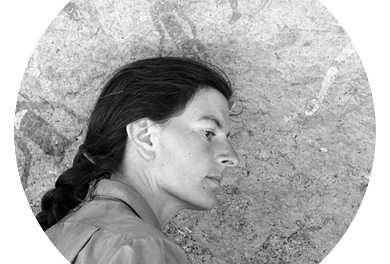
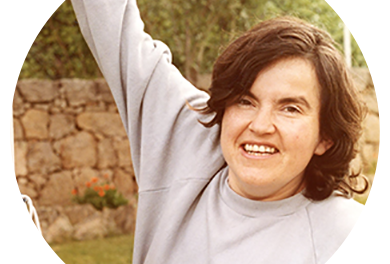
Dorothy Hannah Cox was born in 1892. She was an undergraduate at Bryn Mawr, graduating in 1914, before going on to get her masters in Architecture from Columbia. She would later become a well experienced archaeologist and numismatist, as well as a spy for the Allies in World War II.
During Cox’s career she worked with many outstanding archaeologists of the 20th century. She worked twice with TrowelBlazing archaeologist Hetty Goldman as an architect and trench supervisor. First, Cox joined Goldman in Greece, excavating the the cities of Eutresis and Colophon (1924-1927 and sponsored by the American School of Classical Studies at Athens, ASCSA), and then at Tarsus, in Turkey (1934-1939). Goldman, like Cox, was a kind hearted woman. Goldman worked with the red cross and Jewish communities which had suffered in the first world war. The first excavations Cox did under Goldman revealed pottery and terra-cotta figurines of women such as the hydrophoroi, water-carriers, that have been associated with the goddess Demeter. In other areas of this site, they found houses with features from many different periods. This excavation was able to create a long and fascinating story for the site based on the evidence they had found. Cox and her colleague Piet de Jong fully documented this site through photographs, drawings and plans. The importance of these records can not be over-appreciated. On the later excavation with Hetty Goldman they found both roman and Islamic levels which Goldman said suggested “years of prosperity”.

The cruise passengers of the Zion at Delos, 1923, Dorothy Cox seated at far right. Image courtesy American School of Classical Studies at Athens.
There were a number of archaeologists working in Greece that were recruited by the OSS. Many worked alongside the Red Cross in Greece smuggling supplies to the people, some decrypted code and some gathered intelligence. Dorothy Cox was an ideal candidate for such work as she had served as a nurse in WWI, was fluent is Turkish, Greek and French, and was said to be extremely intelligent and adaptable. She had been recommended by a colleague, Rodney Young. Young was approached by the OSS after an act of bravery while working with the Red Cross following Mussolini’s invasion of Greece. After showing his own abilities, he was asked to gather a group for training. Out of this group Young and Cox were most highly regarded. She had proved herself as a relaxed figure, who knew how to not draw attention to herself. Based in Turkey, she began creating many reports from refugees, deserters and washed-up special agents. Despite being known as ‘their best man in Turkey’ back in D.C., she was only paid secretarial wages and her pleas for supplies were often ignored. However, she did achieve a lot in those days, and she worked alongside the Red Cross and helped supply food, money and shelter to the National liberation front in Greece. Later, she was moved to Egypt where she helped organise relief efforts and gathered intelligence. Acting as an innocent bystander, she often invited soldiers and refugees to her comfortable apartment where they would let slip what they knew, some even drawing diagrams or maps. She often worked closely with other archaeologist-spies, such as Young and Mcfadden.

Tomb 405. From SW end of 405 looking NE toward Miss Cox. Lapithos, Cyprus, 1931. Image courtesy of Penn Museum Archives.
After the war, Cox went back to the US where she became a curator of coins at Yale university. Soon her and many others went back to excavating. She continued to work alongside those that had joined her in espionage during the war. She spent much of her time working closely with Young, and working many times with George McFadden, John Franklin Daniel and Virginia Grace, among others. She did several seasons in the 1950’s and early 1960’s at both Kourion, Gordion, and in Afghanistan. At these sites, she worked as an architect, excavator and published the coins from Gordion after becoming a remarkable numismatist. She spent the last years of her life retired, on her farm in Connecticut, until she died in 1977.

Phrygian, 620 B.C. Plan of trenches and architectural features in Tumulus F. Drawn by D.H. Cox, 1951. Gordion, Turkey. Image courtesy of Penn Museum Archives.

Phrygian, 620 B.C. Plan of cremation offerings as found. D.H. Cox 1951. Gordion, Turkey. Images courtesy of Penn Museum archives.
More information:
https://www.brynmawr.edu/bulletin/perfect-spy
https://nataliavogeikoff.com/2014/08/01/all-aboard-cruising-the-aegean-in-1923/
With special thanks to the ASCSA and Penn Museum archives.
Guest post by Sara Duckworth as part of the 2021 UCL TrowelBlazers Digital Fieldwork Project.