Centering her academic research on the floodplains of the Senegal and Niger rivers, Susan Keech McIntosh’s prolific analysis has shed new light on state formation and complexity in African prehistory. Her seminal work at Jenne-Jeno (conducted largely in collaboration with Roderick McIntosh) has revealed that complex socio-economic structures were predicated on local processes, rather than external pressures. In addition, Professor McIntosh has trained many African students both in the field and at Rice University, creating a profound legacy for the next generation of West Africanist scholars.
Professor McIntosh was educated at Wellesley College, Massachusetts (1969-71), a women’s college that prides itself on their empowerment; this may have contributed to McIntosh’s own values as evidenced by her position as a faculty affiliate for the Center for the Study of Women, Gender and Sexuality. In 1973, McIntosh received her BA in Anthropology from the University of Pennsylvania (with the highest honours) with her MA (University of Cambridge, 1975) and PhD (University of California at Santa Barbara, 1979) following soon after. Since 1984, she has taught at Rice University, where she has occupied the prestigious position of Herbert S. Autrey Professor of Anthropology since 2012.
From 1980, for twelve seasons, McIntosh co-directed field research in the Middle Niger and Middle Senegal Valleys, with funding from the National Science Foundation and the National Geographic Society. These years in the field culminated in major monographs of the sites of Jenne-Jeno (1980; 1995), Sincu Bara (2002) and Cubalel (2016). Alongside the other 80+ articles and overviews McIntosh has written, her research has been instrumental in the reintroduction of West African models into the archaeological theory of complex societies. This was expanded on in ‘Beyond Chiefdoms’ (1999) which explores multiple alternatives to social evolution and hierarchical approaches. Professor McIntosh has herself been a major proponent of the notion of heterarchy and ways that it might be recognised in the archaeological record. McIntosh’s instruction to correct our intellectual biases is clear, from the inclusion of horizontal social stratification as a form of power to the need for African theories and models to be considered outside of Africanist circles in our increasingly globalized world.
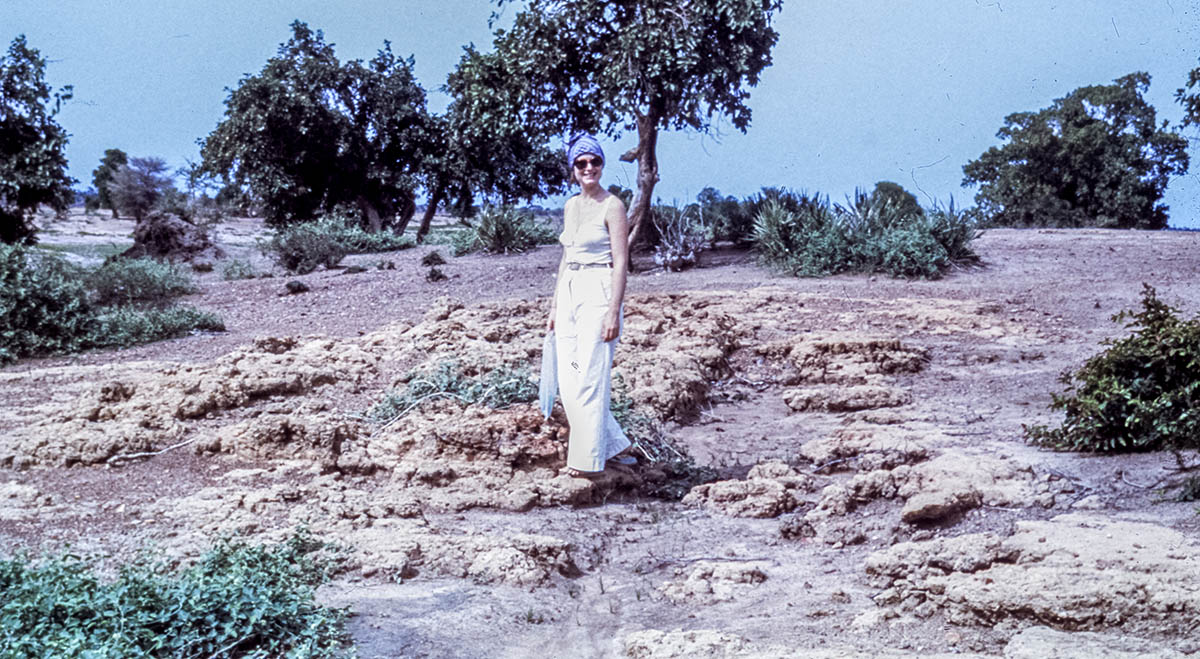
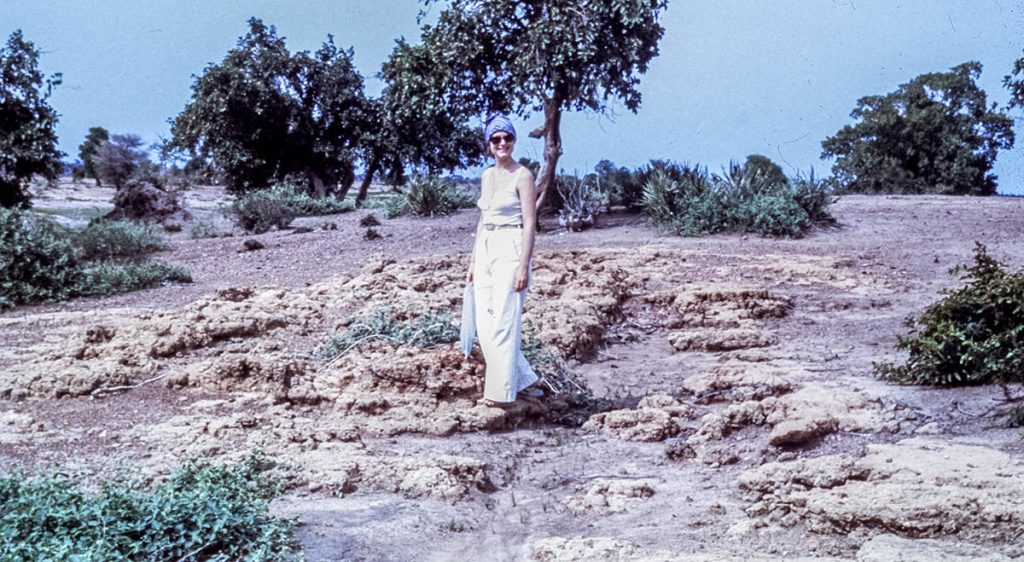
Susan Keech McIntosh at a large mud-brick surface structure, Jenne-Jeno, 1977. (Photo: Roderick McIntosh)
Professor McIntosh’s contributions range widely, across the archaeology of climate change (The Way the Wind Blows, 2000) to issues of cultural property and heritage. As the looting of terracotta statuettes from the Middle Niger became an increasing problem, McIntosh published and lectured on the subject to raise awareness. The fight for fair practice continued as McIntosh served as a member of the US Cultural Property Advisory Committee from 1996 to 2003, an important example of the political influence archaeologists can wield.
McIntosh was nominated by many former students, who emphasised her role in training Senegalese, Malian, Nigerian and Batswana students. Many have gone on to hold leadership positions in museums and academia.
Post by Isabelle Diggle
Images provided by Susan Keech McIntosh and used with permission.