Archaeologists of the Near East, Caucasus, and Eurasian Steppe know Karen Rubinson as a fearless traveler, an insightful scholar, a kind mentor, and, above all, a woman who knows how to build bridges. Bridges between regions, between sites, between objects and their meanings, and between people.
Initially a chemistry major, Karen was lured into the humanities by a course in ‘Asian Culture’ that was intended to satisfy a general requirement at Barnard College. After earning her BA in art history in 1964 and a brief spell working in a conservation lab with ancient Chinese bronzes, Karen went on to Columbia University to study Ancient Near Eastern art history and archaeology under Edith Porada. In due course, she earned her MA (1968), MPhil (1973), and PhD (1976). Karen came to Eurasian archaeology as a graduate student participating in the University of Pennsylvania’s Hasanlu Project in northern Iran. She recalls that Bob Dyson, the project director, was curious to know “what was going on on the other side of the Aras River.” This curiosity ultimately led to Karen’s dissertation on The Trialeti Culture of Middle Bronze Age South Caucasus — a foundational work in scholarship of the region. She is currently a Research Associate with the Institute for the Study of the Ancient World at New York University.
Objects and the stories they tell have always held Karen’s interest. In one memorable experience while working in Sé Girdan, Iran, Karen and some friends were invited into the home of the project foreman to learn how to wear their recently purchased traditional Kurdish clothing. The clothes became a bridge that allowed them to cross the gender divide into the women’s side of the house and to understand the nuances of lived Kurdish culture. Such experiences have served as inspiration for Karen throughout her career, as she works against what she calls the “tyranny of the texts” in Ancient Near Eastern studies and instead focuses on what objects and their contexts — “texts for the textless” — can tell of the history and culture they come from. This perspective is equally apparent in her dissertation as in her most recent edited volume, How Objects Tell Stories (Linduff & Rubinson 2018).

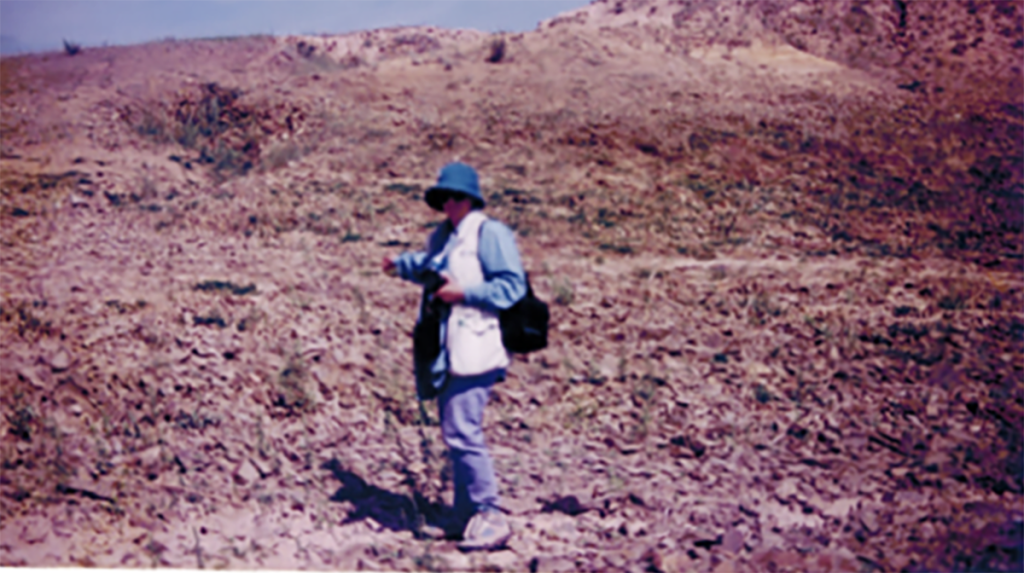
Karen at Botai, Kazakhstan (1995). Photo credit – Katheryn Linduff.
Of her many publications (including the eagerly awaited Borders in Archaeology: Changing Landscapes in Anatolia and the South Caucasus, 3500-500 BCE, now in press), Karen is most proud of her edited volume Ceramics in Transitions: Chalcolithic Through Iron Age in the Highlands of the Southern Caucasus and Anatolia (Rubinson & Sagona 2008), and the workshop from which it grew. The workshop brought together scholars from various countries and backgrounds in the South Caucasus region to work together to understand their ceramic histories. This collaboration not only created a new, integrated body of knowledge about the ceramic history of the Caucasus, but also forged a network and community of scholars that continues to grow today. This interpersonal building of bridges is just as if not more important than the archaeological knowledge that the workshop produced.
To date, Karen remains extremely active in her exploration of both the ancient and modern world. At her annual New York gathering of scholars of the South Caucasus, she continues to share her insights into the archaeology and material culture of the region, tales of her adventures riding Icelandic ponies across a steppe-like landscape, and warmhearted strategy of building bridges within the archaeological community.
—
Post by Jennifer Swerida and Selin Nugent
Images provided by Karen Rubinson and used with permission.