
The prehistoric galleries at the Wiltshire Museum in Devizes hold a stunning collection of artefacts including finely crafted pieces of gold, amber and human bone from burials in the area around Stonehenge, including a number from the graves of what the museum display calls ‘Women of Power’.
The woman of power behind many of the finest collections in the Museum was Maud Cunnington (1869-1951), one of the earliest and most important excavators of the Stonehenge landscape. The legacy of her research, excavations, writings and the sites that she protected are a foundational part of British prehistoric archaeology.
Maud Pegge was born in Glamorgan and educated for a time at Cheltenham Ladies’ College. At the age of 19 she married Benjamin Cunnington, part of the Wiltshire antiquarian dynasty, and the couple settled in Devizes. Their son Edward took an interest in archaeology, and it was this that apparently inspired Maud to become involved in excavations. From c.1908 she was engaged in rescue archaeology, recording the destruction of prehistoric monuments during the construction of a golf course and an early army airfield. She spent her winters writing up her excavations and analysing the ceramic assemblages, which became one of her areas of expertise, and publishing her findings in the Wiltshire Archaeological and Natural History Magazine.
Building on this rescue work, Cunnington began to conduct excavations of sites such as the Knap Hill Neolithic causewayed enclosure and the late Bronze Age/early Iron Age site of All Cannings Cross. Her work was interrupted by the First World War and the death of Edward. In the 1920s and 30s Cunnington and her husband excavated sites including West Kennet Long Barrow, Woodhenge and the Sanctuary, and laid out the latter two with concrete markers showing where the timber posts once stood. The Cunningtons purchased the sites of Woodhenge and the Sanctuary to ensure their preservation, and later presented them to the nation; Maud published monographs on both sites.

Illustration by Gabe Moshenska
By this time Alexander Keiller had begun his excavations at the nearby Windmill Hill and later at Avebury. The two archaeologists loathed one another: Cunnington banned Keiller from her excavations, and he in turn paid her excavation site foreman to spy on her work and send him written reports, which he read and annotated in great detail.
Maud’s honours in archaeology included honorary memberships of the Cambrian Archaeological Association and of the Society of Antiquaries of Scotland, and in 1948 she was awarded a CBE for services to archaeology (the first woman to do so). At the time of her death in 1951 she left most of her wealth to the Wiltshire Museum, which today houses much of her collection and honours her achievements.
Written by Gabe Moshenska
Editing and additional content by Suzie
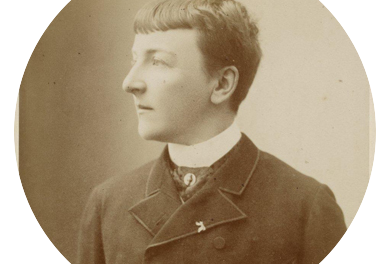
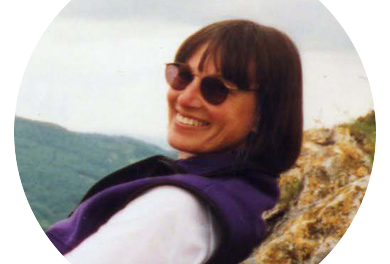
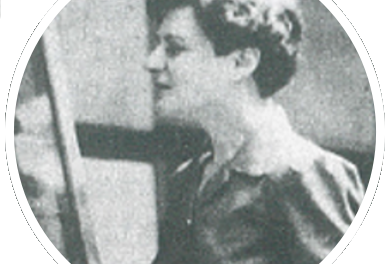
Image of Maud Cunnington courtesy Wiltshire Museum and reproduced here with permission. Photo of West Kennet Long Barrow taken by Suzie in 2009.




See also: J. Roberts, “‘That Terrible Woman’: The Life, Work and Legacy of Maud Cunnington” Wiltshire Archaeological and Natural History Magazine (2002): 46-62. and
M. Pitts 2001. Hengeworld. London: Arrow.
Hello. I am based in Australia and am writing a biography on the remarkable NZ-born collector and art dealer Sir Rex Nan Kivell (1898-1977). An amateur archaeologist he dug at Brixton Deverill and at Stockton Downs from 1924 for several years. He amassed a large collection of around 300 items which he donated to the Wiltshire Museum in 1930. This was the first in a series of generous gifts which he made over the next 40 years. He lived for a time in Codford St. Peter with his ‘old godmother’ Fanny Hulbert until she sold her house there in 1930. Nan Kivell writes a number of papers on his finds for the WANHM, illustrated with his drawings. In the Wiltshire Museum archives they have his manuscript books with his finds and illustrations. A number of his finds are on permanent display in the museum. I am aware that he and Maud Cunnington had some contact in 1930 but I am trying to establish whether they may have known each other earlier. It is curious that with no formal archaeological training he invests the time and resources which he does into years of digging/publishing/gifting. If anyone could give me any leads on this time in Nan Kivell’s life it would be greatly appreciated. Also, if anyone could put me in contact with Julia Roberts who wrote the very interesting article on Maud Cunnington, that would be much appreciated.