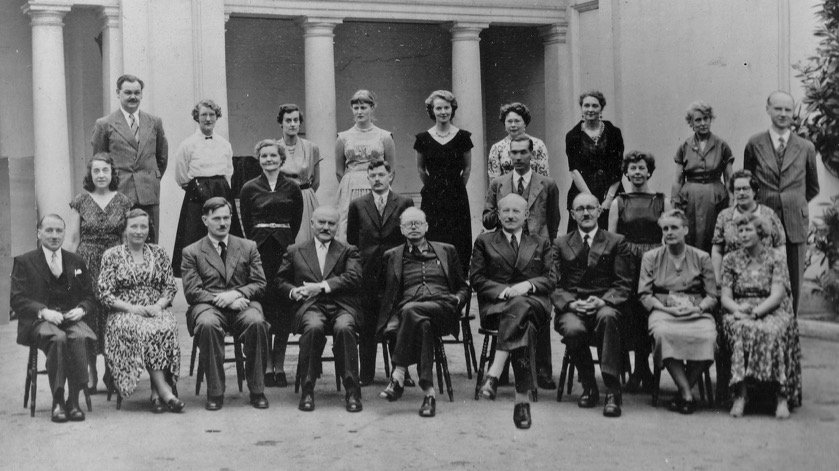
The Institute of Archaeology (now part of UCL) was opened in 1937 as an independent school of the University of London, fulfilling Mortimer and Tessa Wheeler’s vision of a centre for archaeological training in Britain. This post aims to dig in (…sorry) to the networks which brought several TrowelBlazing women to study, work and teach there in its early years.
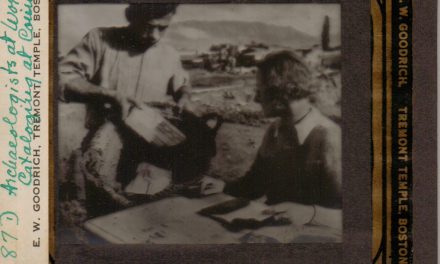
Sadly, Tessa Verney Wheeler died unexpectedly in 1936 before the Institute physically opened for teaching, but she played an essential part in bringing it about and was a key influence on many other female archaeologists. In particular, working with her on the Verulamium and Maiden Castle excavations encouraged many women to pursue archaeological study. These included Rachel Clay (later Maxwell-Hyslop) and Molly Cotton who became two of the earliest students to study at the Institute as well as several women who worked in paid or volunteer roles running the early Institute including Florence M. Patchett, Joan du Plat Taylor and Ione Gedye. That Tessa Verney Wheeler was the figure who inspired many of the students working there is well summed up with the quotation from Veronica Seton-Williams: “For me by 1936 the magic of the great hill fort had gone; Mrs Wheeler was dead”.
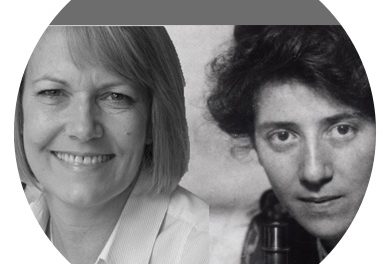
Kathleen Kenyon, who was closely connected to the Wheeler’s having been heavily involved in the Verulamium excavations, also played a major part in bringing about the Institute of Archaeology and when it first opened was responsible for much of the day to day running and organisation of it. This was to some extent acknowledged by her appointment acting director during the second world war, but from 1937-1942 she was the Institute secretary and a large part of her role related to running the library. Despite her impressive experience she was not made a lecturer until 1948 and though many people thought that Kenyon might be appointed the Institute’s full time director, it was not until 2014 with the appointment of Sue Hamilton that the Institute actually gained its first female Director outside of wartime. Though they often had equal or superior prior experience in the field to their male counterparts, the story for many other women was similar and the roles they were allowed to fulfil and chances for success were often largely dependent on family connections and personal wealth.
However, there are still many inspiring TrowelBlazing stories from the institute to be told. Ione Gedye founded the institute’s ‘repair department’ and she and Delia Parker led conservation at the Institute as well as producing informative public archaeology material for the BBC. In the library Joan du Plat Taylor, Geraldine Talbot and later Heather Bell along with many assistants expanded the collection and updated the cataloguing and organisation to make it a world leading collection of archaeological texts. Many impressive students passed through the Institute and were inspired by these women. In addition, the institute served as a centre for archaeological research which brought people together, allowing talented archaeologists to meet and share ideas. In the 1950s Honor Frost met Joan du Plat Taylor at the Institute and recruited her to the cause of underwater archaeology, which Taylor would become instrumental in the establishment of as a discipline. Around the same time Crystal M. Bennett was studying at the Institute under Kenyon and she would later go on to earn an OBE for her extensive archaeological work in Jordan.
In 1986 the Institute of Archaeology became part of University College London, but it would still take until 2002 for Ruth Whitehouse to be appointed as the first female professor there. Today there is still a low proportion of women in more senior roles despite a majority female student body since the early 1990s, but staff and students are working hard to change this and shine a light on the influential women in the Institute’s past!
Images © UCL, Institute of Archaeology
Resources:
https://www.ai-journal.com/articles/10.5334/ai.1817/ – From the Archives: Women of the Early Institute, by Elizabeth Pye, 2015
https://www.ai-journal.com/articles/10.5334/ai.1811/ – The Institute of Archaeology Library 1937–1986: Collections, Communities and Networks, by Katie Meheux, 2015
Road to El-Aguzein, by Veronica Seton-Williams
Tessa Verney Wheeler: Women and Archaeology Before World War Two, by Lydia C. Carr
An Interview with Professor Ruth Whitehouse, Institute of Archaeology, UCL. Papers from the Institute of Archaeology, 13, pp.21–33. by F.Handley, S.Townend, J.Eklund and C.Kleinitz, 2002. (available free online at research gate)
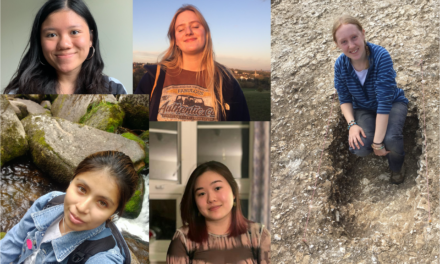
Written by Isla Lury as part of the TrowelBlazers Digital Fieldwork Project at the Institute of Archaeology, UCL.