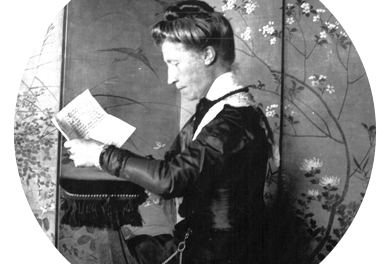
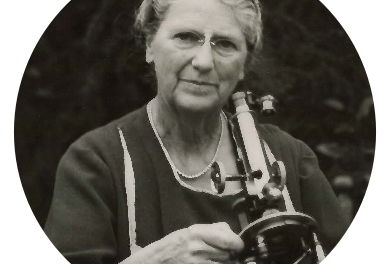
Joan du Plat Taylor (1906-1983) is most often remembered for her promotion of nautical archaeology, but she also had a varied career working at many famous excavations and inspiring many more archaeologists in her twenty-five years as a librarian at the Institute of Archaeology at UCL. Having grown up in Scotland, her archaeological career began when her family started spending winters in Cyprus in 1926. Here she was introduced to archaeology through the work of the Swedish archaeology expedition led by Einar Gjerstad and soon after began to volunteer at the Cyprus Museum. She had no formal education but was well-read and a quick learner, taking the opportunities available. Her contribution was acknowledged in 1932 when she was made an honorary assistant curator and appointed as acting inspector of antiquities during the inspector’s absence, although she was unpaid.

Joan du Plat Taylor at the Institute of Archaeology Library. Image © UCL, Institute of Archaeology.
Eager to continue her archaeological work during summers spent in Britain, Taylor joined Mortimer and Tessa Wheeler’s excavations at Verulamium in 1931-2 and Maiden Castle in 1935-6 and learned much about excavation procedure, as well as meeting Veronica Seton-Williams who would become an important friend and colleague. Throughout the ’30s she also excavated extensively in Cyprus, with this beginning to take precedence over her work at the museum as she was made director of several small projects and two major excavations at Ayios Philon and Aliki. Veronica Seton-Williams joined her in Cyprus for a time and the two published work together as well as traveling in Europe and the Near East. They hoped to excavate in Syria after conducting widespread field surveys in 1939, but the outbreak of war prevented this and after a short return to Cyprus, Taylor returned to London.
During the war, Taylor worked as an ambulance driver and a censor at the Ministry of Information, but she was also able to connect with the broad network of archaeologists she had met through the excavations she had been part of. In 1945 she took up the post of librarian at the Institute of Archaeology. This provided a salary she needed as her father had died in 1936, but it also gave her the opportunity to learn from many leading archaeologists and she was allowed three months’ leave per year to continue participating in excavations. Although she had no formal training, she succeeded in expanding and organizing the Institute’s collection and her field experience also allowed her to be a great help to many students.
She continued to collaborate on projects with Seton-Williams in the late 1940s and throughout the 1950s, excavating for a final time in Cyprus before the struggle for independence made it impossible to return there and then to Turkey and Syria. In the late 1950s, she met Honor Frost, and the friendship they began inspired Taylor to join Frost’s campaign to bring underwater archaeology into the mainstream. Ironically, Taylor was not a particularly confident swimmer and did not enjoy her attempts at diving, but she became heavily involved in developing the procedures for excavating and conserving artifacts from underwater sites and worked extensively in Turkey and Italy throughout the 1960s. Her extensive network and influence and the publishing of the results of these excavations did much to help establish underwater archaeology as a field, as did her work with the Committee for Nautical Archaeology which she was vice-president of when it was founded in 1964.
In 1970 Taylor retired from the Institute of Archaeology and stopped actively excavating, turning her focus to completing the reports of the projects she had been part of and was successful in completing all of her outstanding work before her death in 1983. She also founded the International Journal of Nautical Archaeology and Underwater Exploration and was the editor from 1972 until 1980. This provided a platform to share the discoveries and developing techniques of underwater archaeology, helping to cement it as an important discipline. In 1976 she was awarded an honorary doctorate from the University of Pennsylvania in recognition of her work.
Images © UCL, Institute of Archaeology.
Resources:
https://www.brown.edu/Research/Breaking_Ground/results.php?d=1&first=Joan&last=Du%20Plat%20Taylor – Brown University, Breaking Ground: Women in Old World Archaeology
https://www.brown.edu/Research/Breaking_Ground/bios/Du%20Plat%20Taylor_Joan.pdf – JOAN MABEL FREDERICA DU PLAT TAYLOR, 1906 – 1983 By Nicolle Hirschfeld
Hirschfeld, N. (2007). Joan du Plat Taylor: The road to Apliki. In B. Kling & J. D. Muhly (Vol. Eds.), Studies in Mediterranean Archaeology: Vol. 134. Joan Du Plat Taylor’s excavations at the Late Bronze Age mining settlement at Apliki Karamallos, Cyprus (pp. 3-6)
https://www.ai-journal.com/articles/10.5334/ai.1811/ – The Institute of Archaeology Library 1937–1986: Collections, Communities and Networks By Katie Meheux
Written by Isla Lury as part of the TrowelBlazers Digital Fieldwork Project at the Institute of Archaeology, UCL.