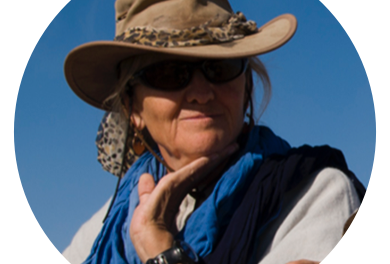
Ruth Whitehouse is a London-born archaeologist, academic, mother and grandmother. Ruth has contributed to many political matters since her teenage years, such as: Young Socialists, Anti-Apartheid Movement and Campaign for Nuclear Disarmament.
Ruth started her extensive career in archaeology and academia with a love of the country and archaeology of Italy and completed a PhD in Early Agricultural communities in Southern Italy at the University of Cambridge. Ruth worked at Lancaster University until the department closed in 1988, she then moved to Queen Mary College. After five years of working at Queen Mary College the department was closed and Ruth started working at UCL Institute of Archaeology. While at the Institute of Archaeology, Ruth started ‘the women’s group’ in 2000 and became the first female professor at the Institute of Archaeology until her retirement in 2008.
I would like to thank Ruth for taking the time to be interviewed for the TrowelBlazers website. Please find below what Ruth had to say from the interview. At the bottom of the page you can find a link to the full transcript from the interview.

Ruth’s first visit to southern Italy in 1963. Image courtesy of Ruth Whitehouse.
Can you outline a brief history of your work experience, including what roles you have had and what you have done as part of these roles?
“In the first years after I left University, I was doing my PhD and my husband ran a large excavation in Iran, on the Persian Gulf, so we were out there for about six months of the year, most years. During that period, which was about 1966-72, I think, I acted as a site supervisor on that excavation. It was a medieval site and I’m not a medievalist. During that period I had two of my children, so they were out there as well.
When we came back from this excavation there was a year or two when I wasn’t doing any work and I had my third child. Then, in 1975, my marriage broke down and I started looking for jobs. For a couple of years I did extramural teaching for London University, something that Birkbeck organises now but I think it was organised by some different department then. In 1977 I got a lectureship at Lancaster university, and since that time until I retired, I was a university lecturer. I was at Lancaster from 1977 – 1988, until they closed the department there. Then, I moved to Queen Mary College, or Queen Mary and Westfield College as it was then, in London University. I was there for five years, until they closed that department. It was then that I transferred to UCL Institute of Archaeology and I was there until I retired in 2008. So that’s a very brief history of my employment. “
You mentioned a few of the departments closing down. Can you tell us more about this?
“That was part of the broader political agenda that was going on at the time and it coincided quite precisely with the domination of Margaret Thatcher as Prime Minister. I got the job in ’77 at Lancaster when university departments were still expanding. I should go back in time and say that when I went to university as a student in 1961, there were only 3 places in the whole country that did a first degree in archaeology: Cambridge, Cardiff and Edinburgh (and I went to Cambridge). Then, fairly rapidly over the later part of the 60’s and early 70’s it expanded dramatically, and it went up to something like 24 departments. So, actually at that time, if I had been looking for a job in the late 60’s or early 70’s it would have been easier to get one as there were more jobs being advertised than there were people graduating out of the departments.
When Margaret Thatcher came into power in 1979 it all started to contract quite dramatically, and during that time about 10,000 academic jobs were lost in British Universities. These weren’t entirely archaeology related but departments like archaeology were particularly under threat. It was exactly the same rhetoric that we are getting now, with arguments such as “they’re not useful” and “they don’t contribute to the economy”, but that’s not what university is about in my opinion. But talk about déjà vu, I’m seeing it happen again, and it’s horrible … the Lancaster department was closed in ‘85 or ’86, but then kept teaching the students who were in place, which is exactly what they are planning at Sheffield.”
As someone who has done a lot of work in Italy, what initially drew you to the archaeology of Italy?
“It’s a mixture of accident and desire. My husband was a year older than me and he started his PhD while I was still doing my last year of undergraduate studies. His PhD was on medieval pottery in Italy and he had a scholarship at the British School of Rome. During that year, I went out several times and just fell in love with Italy. It really was love at first sight with the country, with particularly the south. So, a year later when I was choosing my PhD subject, for both practical reasons and the love of Italy, I chose an Italian subject.”
Are there any women who have inspired you or influenced your work throughout you career?
“I thought about this one quite hard, as there are lots of the particularly early Women Archaeologists that I admire a lot, but I don’t particularly think of them as role models as such. I admire people like Margaret Murray who was at UCL as an Egyptologist, who brilliantly wrote an autobiography called ‘My First Hundred Years’, as she was one hundred when she wrote it. There is also a woman called Katherine Routledge who worked on Easter Island, or Rapa Nui, where I have also worked in relatively recent years with Sue Hamilton. Katherine worked on the island basically as the beginning of the first world war, in 1913 and 1914, and did some completely amazing work, so I admire her a lot. Coming a bit more into our own times, there are people like Beatrice de Cardi, who did work in Oman and places like that.
So, I admire those people a great deal and I also have a great deal of admiration for more contemporary colleagues. However, I wouldn’t say that they provide specific inspiration to me. To be honest it puzzles me a bit about myself that although I’ve always been very political, I mean I have worked in the Young Socialists, Anti-Apartheid Movement and Campaign for Nuclear Disarmament from my teens onwards, but I didn’t really get into the Women’s movement nor was aware of the problems that women faced until much later. I often wonder why that is, but I think it is probably because it wasn’t the case in my home background; it was assumed that my sister and I could always do the same things that my brother did if we wanted to, but it was just taken for granted. It took me a long time to realise what the problems in society were.”
What was it like being first female professor at the Institute of Archaeology? And did you face any challenges while undertaking this role?
“I was very surprised that I was the first female professor as I shouldn’t have been. Kathleen Kenyon, an archaeologist who dug at Jericho, ran the Institute of Archaeology during the war when the men were away fighting, and she was never made a professor, which is just absurd. She deserved it in terms of both her academic output and the job that she did running the Institute. Coming to more recent times, people who were at the institute when I went there in ’93 like Harriet Crawford and Georgina Herrmann definitely should have been professors.
I do think to myself that I should have had it five years earlier as later on when I looked at the criteria, from being on various committees to judge later applicants for professorships, I thought I actually had that experience at least five years before. … The best thing about it and something that I didn’t expect was the reaction from the female PhD students, who were overjoyed. It was partly on my behalf but I think it was mostly because it showed that it could be done.
As for challenges, I don’t think that there was anything that particularly struck me when I became a professor but by that time I had overcome that situation which I described before about not being aware of women’s position in the profession or in the world at large … there were all kinds of things within the Institute that needed changing and since then we have implemented some of these changes. … there were things about the governance and the way that the institute work that made me look around and think, where are the power structures in the institute? … the people who have some power over policy are the chairs of the teaching committee and research committee, the two most important committees in the institute. At the time that I started thinking about this, the chairs were men and had always been men. So, what we (as it wasn’t all me) did was implement a system that there is a chair and a deputy chair, where the aim is that the deputy chair is of a different gender to the chair. Then, normally the deputy chair becomes the next chair, so in practice there is more-or-less an alternation, meaning that we have had a woman chair of both of those committees.”
Is there any advice that you wished that you had received when starting out in your career? And is there any advice that you would give to a woman wanting to get into a senior position in archaeology or academia?
“I had lots of advice when I was starting doing things and a lot of it was very contradictory. One was from the parental generation, not my own parents who were brilliantly supportive but a lot of people in that generation, as a lot were ‘tut tutting’ and saying “you have to settle down, that has to be your priority”. And on the other side some of my more active political friends were saying “you’ve got to lead the way and set an example”.
I honestly think that the only advice that I would give is that people have to do what feels right for themselves. I don’t mean that you don’t listen to the advice of other people, and I think it is well worth listening to what people say but in the end you’ve got to do what feels right for yourself. Otherwise I think it’s a disaster because if you do it for a cause or something, you can end up sacrificing your own personal life. It’s stressful for anybody in the academic world, male or female, but women do face particular problems.
For me, I always knew what I wanted to do in the general sense as I knew that I wanted to have a career in archaeology and I wanted to have a family, but I didn’t have any particular ideas about how I would accomplish it all and in what order … but I also think that these are things that women are always balancing and I think when to have a family is a particularly problematic one because unfortunately there is a biological clock. Where men can put it off almost indefinitely, women can’t. … I do see it with women today because to make a career in the academic world these days you do have to go through the whole Masters, PhD, Post-doc (often several Post-docs) thing before you can get a permanent post. And where do you fit children into that quite pressurised timetable when you don’t know whether you’ve got a salary? Obviously, it depends on personal circumstances, what peoples’ partners are doing for example, but it is a problem. It’s recognised these days within the profession at least that it needs to be taken into account, and for something like the REF, the Research Excellence Framework, they do take maternity leave into account and you don’t have to produce the same number of publications but they’re meant to be of the same quality – which is reasonable. On the other hand there is so much pressure on young academics today, I think it is really difficult, but I don’t really have an answer. A lot of people do not want to have children, and I don’t feel that people should have children, but I feel that if they want to, they should be able to. And I guess you can’t do anything about the biological clock, but you can have sympathetic heads of departments, and the more sympathetic the better.
In the end, people have got to answer to what feels right for them, I think it is the only way to go. … you’ve only got one life, at least I assume you have, and you can’t make decisions that relate to what other people would like you to do if those things are wrong for you.”
Is there anything else that you would like to say, or any advice you would like to give to the people reading TrowelBlazers?
“The only person that you have to answer to is yourself. That goes for issues of morality and so on, in general, don’t do anything that doesn’t feel right and do the things that do feel right. If sometimes you don’t have a very easy choice, that just how life works out. On the whole, I have to say that when I look at the younger generation of archaeologists and the onesI know well who are in the areas that I work in, I am encouraged and there is lots of good stuff going on.
I am gloomy about the immediate political prospects in this country, but I also know that there is another side to that journey and things will improve again. One just needs to fight the battles that need fighting. Sheffield needs to fight the closure and whether they are successful or not, it is the only thing that they can do in terms of self-respect and the broader fight for the subject. … I mean it’s all nonsense that archaeology doesn’t play a role in the economy, if you think about the whole heritage/museums side and its contribution to tourism.
I would also like to talk about the most recent field project I was involved in which was the Tavoliere-Gargano Prehistory Project that was in south-east Italy … a project where Sue Hamilton and I were joint directors and I have found that there is a real difference in having a project that is run by women. To what extent that is just Sue and me - we are good friends as well as colleagues or to what extent it is true more generally, I can’t really say. There is quite a lot of scholarship on women’s work as leaders, relating to more collaborative and less hierarchical styles of working. That has certainly been my experience and I think it can only be a good thing. … It is something that is worth considering because you absolutely don’t need that hierarchical style, at least from my experience in field archaeology. There is no particular reason for it. There is a historical reason for it, the fact that people like Wheeler came straight out of the army, and that was that kind of military discipline, that has cast a very long shadow, I think. Different styles of organisation are viable, and if you get people contributing ideas, whether they’re a director or the person doing the trowelling, I think it is a better model. Certainly, that last project, from about 2002 – 2008, was the most harmonious I’ve been on (I don’t mean there weren’t rows and things, there always are). So, I think that is something that is quite interesting for people today to consider.”
I would like to thank Ruth for her time and contributions to the interview and post. All photos have been provided by Ruth Whitehouse.
Further resources:
https://journals.equinoxpub.com/JMA/article/view/5640 – M, Pearce, S, Hamilton, K, Brown. 2008. Ruth D. Whitehouse. JOURNAL OF MEDITERRANEAN ARCHAEOLOGY, VOL 21, NO 1
https://figshare.com/articles/online_resource/Ruth_Whithouse_-_Interview_Transcript_pdf/15059421 – Link to the full interview with Ruth Whitehouse
Guest post by Gabby Hart, submitted as part of the 2021 TrowelBlazers Digital Fieldwork Project at the Institute of Archaeology, UCL.