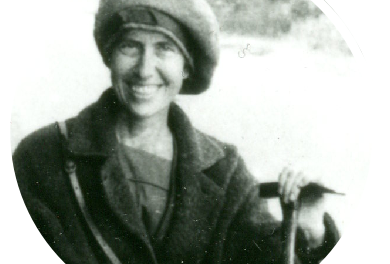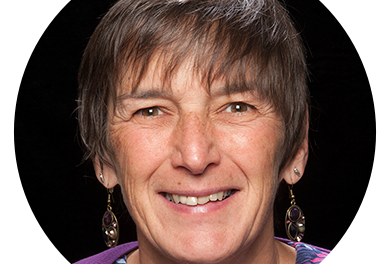
Elizabeth Campbell (1783-1861) and her daughter, Thomasina (c. 1804-88) are two of Scotland’s earliest female archaeologists. This rare mother-daughter investigative duo published at least one prehistoric site in the Georgian era, while renting Kilravock Castle. Born Turner and raised by her stepfather Sir Thomas Gascoigne (1745-1810) at Parlington, near Leeds, Elizabeth grew up in a setting of ‘Enlightened’ interests in history, agriculture and horticulture, and attended schools in London and Yorkshire.
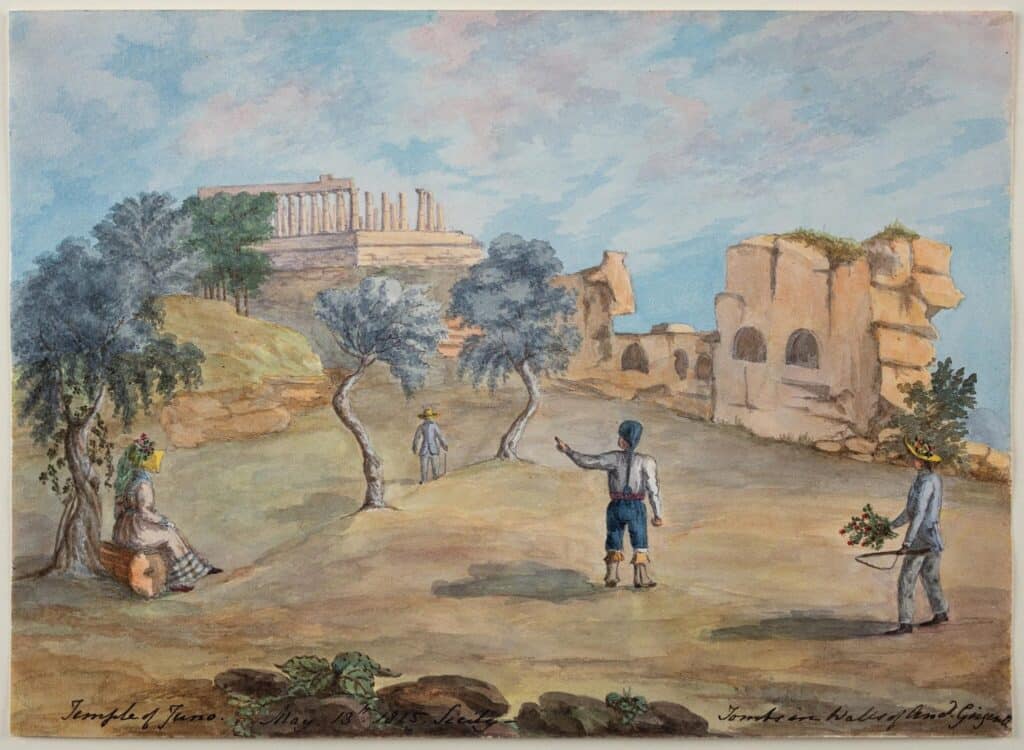
In 1801, Elizabeth married Lt Col William H Campbell, who died of fever just ten years later during the Peninsular Wars, but not before they had a child, Thomasina Mary Anne Eliza Campbell (born in 1804). From 1818-1828, both women travelled between France, Switzerland and Italy, taking in parts of the classic ‘Grand Tour’, something more typical for educated, wealthy young men. Elizabeth created extraordinary watercolours of her travels, not just castles and ruins, but local culture and her lodgings, giving rare insight into the realities of travel for an independent, albeit privileged, woman. She also made a pioneering ascent of the passes round Mont Blanc in 1822, reported in newspapers, and known to Anne Lister, an entrepreneurial Yorkshire landowner, profilic diarist and (now very famous) 19th century lesbian.
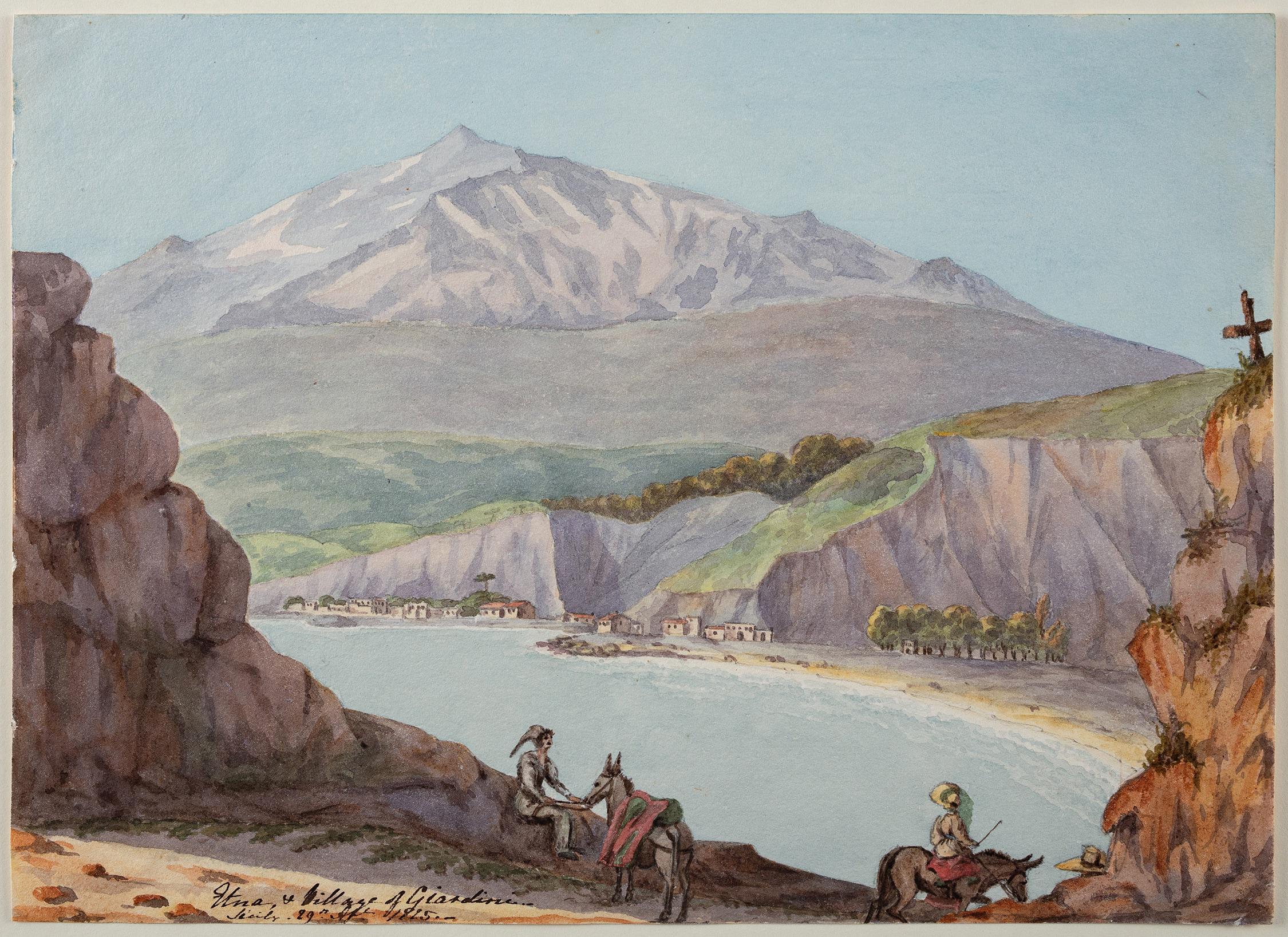
Watercolour painting by Elizabeth Campbell, Sicily, 1825. ‘Etna & Village of Giardini – Sicily 29th April 1825’; a guide, Elizabeth Campbell and either Mr Walker or Mr Moore. The woman on muleback is Elizabeth. By kind permission of Tom Edwards of Abbott and Holder Ltd, London. https://www.abbottandholder.co.uk/elizabeth-campbell-sicily-1825/
Elizabeth leased Kilravock Castle, Nairn, from 1828 and within her role managing the estate, also developed an interest the history of Scotland. This included prehistoric sites, and Elizabeth targeted one of the famous Bronze Age Clava Cairns tombs outside Inverness (which feature in ‘Outlander’) for study in 1829, or spring 1830. Dubbed by the historian T D Lauder ‘the Scottish Stonehenge’, due to its varying stone circles and monuments, in 1829 he published ‘The Great Floods of August 1829 in … Moray’, when cataclysmic storms hit north east Scotland, and included her ‘proto-excavation report’ and drawings of the entrance, and cinerary urn fragments, in his book:
‘A great cairn … was lately opened (by direction, and under the superintendence of Mrs Campbell …) a curious circular apartment was discovered … A passage leads inwards from the south’.
Lauder also notes that Miss Campbell (Thomasina), now in her mid-20s, sent a detailed artefactual description of a clay vessel, found ‘about 18 inches below the earth, exactly in the centre of the circle … the vase … enclosed in … clay quite distinct from the natural soil’.

Drawing of opened south westcairn, Balnuaran of Clava, by Elizabeth Campbell, 1830; from TD Lauder’s ‘Account of the Great Floods of August 1829 … in Moray’, published 1830 (out of copyright)
However, decades of confusion followed, as Lauder didn’t identify which grave was examined – it was actually the south western cairn, Balnuaran of Clava. Historian Cosmo Innes misplaced the site in 1857 – alleging the eastern cairn was ‘opened by Miss Campbell’, giving the wrong tomb, and wrong woman – it was in fact Elisabeth! This error became ‘fact’ in 1869, when the label ‘Urns Containing Calcined Bones found here’ was placed beside the wrong cairn on the 1st edition of the Ordnance Survey map. Only the aristocratic, but absentee (male) landowners had been consulted by the mapmakers. At last in 1884, the surviving workmen were interviewed, and Elizabeth’s discoveries were marked at the correct, south western passage grave.
Balnaruan in fact has had a quartet of female investigators – Kathleen Kennedy and Audrey Henshall re-excavated in the early 1930s, and 1960s – yet even in a authoritative 2000 overview (‘The Good Stones’, Richard Bradley’) this conflation of owners, finds and locations is omitted.

Drawing of urn from Balnuaran of Clava, by Elizabeth Campbell, 1830; from TD Lauder’s ‘Account of the Great Floods of August 1829 … in Moray’, published in 1830 (out of copyright)
Most rich widows appeared in the national census as having ‘independent means’, but Elizabeth describes herself in 1851 as a ‘gentle woman, farmer of 188 acres’, employing 17. Through the 1830s-40s, together the Campbells attended the usual local charitable and social gatherings, and were passionate horticulturalists, landscaping and roadbuilding around Kilravock at their own expense, and Elizabeth selectively bred prize-winning pigs and Highland cattle. When the King of Saxony visited their gardens in 1844, it was Thomasina who broke gender stereotypes and protocol, by literally taking the reins, and ‘drove His Majesty to Cawdor Castle’!
Elizabeth died in 1861, and Thomasina, now middle aged, next rented Moniack Castle from 1863, and obviously retained an interest in the past: she ‘antiquarianised’ the large rockery by installing the Balblair Pictish stone. This combines Neolithic cup-marks and an incised early-medieval warrior, and remains at Moniack as a souvenir of her time.
Thomasina also became an author, publishing ‘Notes on the Island of Corsica in 1868’, a guidebook for English visitors and settlers, illustrated by artist/poet Edward Lear. She became deeply involved in promoting Corsica as a health resort for British expatriates, and a quieter alternative to the crowded Riviera, including undertaking property developments in Ajaccio’s ‘quartier des Étrangers’. As a successful, independent businesswoman and entrepreneur, with male commercial partners, Thomasina was a great success, and also had time to excavate Roman and Etruscan sites, build her own villa – the ‘Tour d’Albion’ – and fund an Anglican church (1878) for English visitors. Thomasina died in 1888, and further research into her multifaceted life is now ongoing.
Post by Morag Cross
Editing by Rebecca Wragg Sykes