Dr Alicia Odewale is an assistant professor and African Diaspora archaeologist of African descent. She very kindly agreed to be interviewed for this post, and share her thoughts and experiences — the following biography and insight comes directly from Dr Odewale herself!
Alicia’s focus is based on community-centred, anti-racist and black feminist archaeology. She was born and raised in Tulsa, Oklahoma, USA. She has a 6-year-old daughter (who is adorable!) and is currently living in Texas where she is on temporary leave for her sabbatical. She is an assistant professor at the University of Tulsa; however, this fall she will remain on research leave. Her interest in the field of archaeology and particularly her specialization stems from her Latin class in high school wherein she found Greco-romans to be fascinating but could never really find any self-reflections of herself. In 2009, she graduated with a bachelor’s degree from Westminster College. In 2012, she graduated with a master’s degree in Museum Studies and Management from the University of Tulsa, and she was the first person of colour to complete this degree in Tulsa! In 2016, she obtained a doctorate in anthropology from the University of Tulsa, and was again the first person of colour to do this in Tulsa!

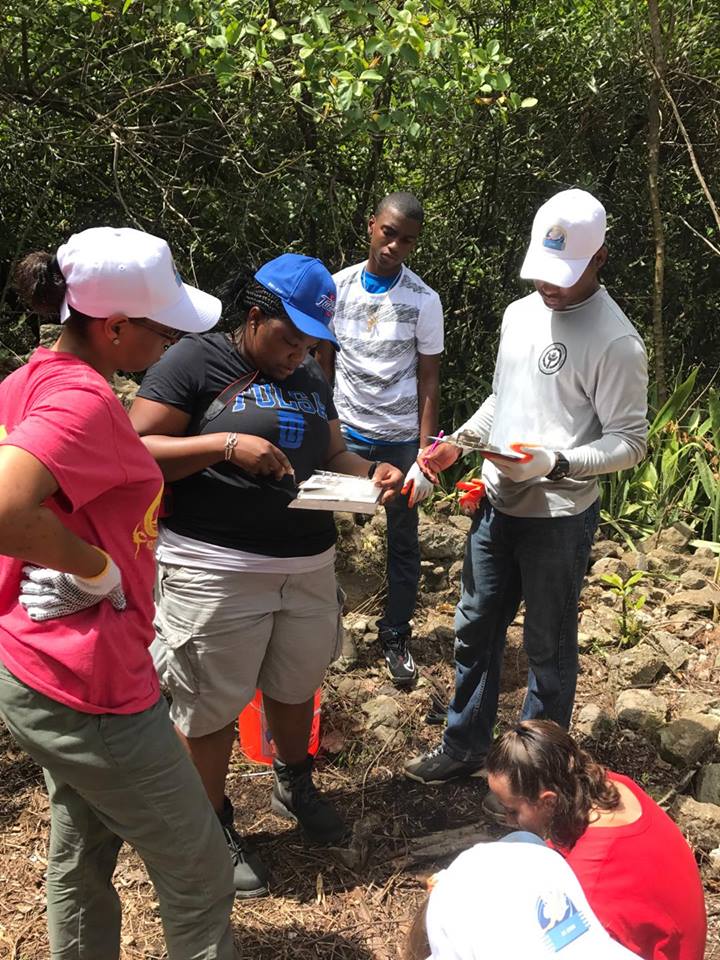
In 2016, before finishing her doctorate, she was hired as faculty member at the University of Tulsa, however she only began teaching students in the fall of 2017. She has worked at various locations in the USA such as at US President’s estate Montepelier in Virginia, as well as locations in Arkansas, Oklahoma, and Texas. She has also been working on a project in downtown Christiansted on the Caribbean island of St. Croix on the archaeology of enslaved individuals living in a warehouse. On the island of St. Croix itself, Dr Ayana Flewellen and Dr Justin Dunnavant asked her to join the Estate Little Princess project. At the Estate Little Princess project, she focuses on the urban archaeology, and more specifically the comparison between the urban versus rural settings there and how the interaction between the two can be observed from their respective unique characteristics in the archaeology found. Alongside this, she also works on another project in the Greenwood District of Tulsa, Oklahoma; the location of the Tulsa Race Massacre. This project is also a co-collaborative project wherein they are conducting a systematic survey of the site, and she aims to focus on mapping the historical trauma from 1921-2021. When she began working as a faculty member at the University of Tulsa, she created a Historical Archaeology and Heritage Studies Laboratory and is the director of it.

Image from the June 6th, 1921 Evening Ledger, originally captioned: Tulsa race riot, original caption: The above picture, the first received from Tulsa, Okla., since the destructive race riots there, shows the havoc wrought in the Negro residential section of the city. More than ten blocks of Negro homes were burned to the ground. Thirty persons were killed in the riots, it is estimated.
As a faculty member at the university, she is constantly trying (and succeeding in her efforts!) to make an environment for her students wherein she introduces them to various cultures of the world, and forces them to address the key issues of racism, colonialism, classism and sexism in the world. She aims to provide a network for her students and a way to access the information and meet people and gain work experience with them. Her work in archaeology, whilst offering new interpretations and a huge mass of information, also illustrates the ethical ways of working in different locations. She explicitly states that her work is not just about the place, but about the people in the past, present and the future. She identifies the problems within the field and the challenges women in this field face and provides her take:
“If you get over all of those hurdles, at the end of the day it’s like you still have this extra weight on you, to try and make this field work for you when it’s not designed to work for you”.
Most importantly, once addressing these issues, she wishes to share with the readers that:
“If I was going to sum up everything I value about archaeology, I value the opportunity to change it.”
http://aliciadodewale.com/index.php/about-me/
Images courtesy of Dr. Odewale and Wikimedia.
All the information taken from Alicia Odewale herself during an interview. Part of a series profiling the TrowelBlazers of the Estate Little Princess excavation.
Written by Sakshi Surana as part of the TrowelBlazers Digital Fieldwork Project at the Institute of Archaeology, UCL