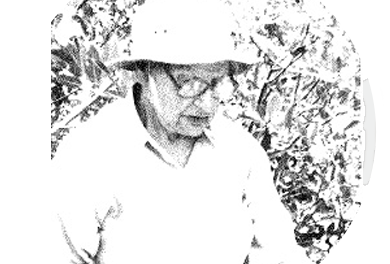
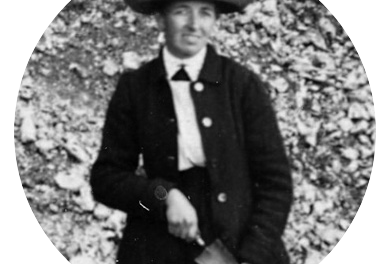
Harriett Allyn (1883-1957) initially trained as a zoologist, studying at Mount Holyoke College until 1905, then completing a Ph.D. at the University of Chicago in 1912. Though little is recorded about her background, it can be assumed that she was reasonably wealthy given the difficulties for women in obtaining higher level education at the time (although she did work from 1905-1909, so may have partially funded her own education from her salary). Following this, she became an instructor at Vassar College but remained there for only a year before making the drastic move to Hackett Medical College in Canton, China, with a personal friend and daughter of the founder Martha Hackett. She taught zoology and pre-medical subjects here and served as Dean from 1915-1923, fighting alongside Dr. Hackett to try to keep the College exclusively for women and run by women.
In 1923 Allyn returned to the United States, teaching at Monticello Seminary in Illinois for a year before returning to Vassar College again as a zoology instructor in 1924. It is around this time that her interest in archaeology and anthropology seems to have begun in earnest, and her interest led to the founding of anthropology teaching at Vassar. By 1926 Allyn was excavating with the American School of Prehistoric Research near St Leon in France and at Pekárna cave in Czechoslovakia. At this time she is sometimes incorrectly referred to as “Mrs. Harriett Allyn” in records, despite the fact that she never got married, perhaps reflecting the fact that most other women on these excavations were the wives of archaeologists working there and are rarely recognized as experts in their own right even when they contributed equally to research. Though she had a Ph.D., few records at this time refer to her as Dr.
In 1928 Allyn was offered the post of academic Dean at Mount Holyoke College, which she took on the condition that she could establish an anthropology course there, marking her full transition to a professional anthropologist. Before joining Mount Holyoke in the fall of 1929 she took a year’s leave, studying at the Smithsonian in Washington in the summer of 1928 and then studying under anthropologist George Grant MacCurdy at Yale (who she had previously worked with in 1926 with the American School of Prehistoric Research). In the spring and summer of 1929, she also joined Dorothy Garrod’s famous excavation team at Mount Carmel alongside old friend Martha Hackett, yielding some of her only recorded published archaeological research, and at this time she traveled around Europe again finding collections of material for teaching at Mount Holyoke.

Dorothy Garrod with the members of her first excavation crew at the Mount Carmel Caves, 1929. From left to right, Elinor Ewbank (Lady Margaret Hall, Oxford), Dorothy Garrod, Mary Kitson Clark (Girton College, Cambridge), Dean Harriet M. Allyn (Mount Holyoke College, USA), and Dr Martha Hackett.
Used with kind permission from the Dorothy Garrod Photographic Archive at the Pitt Rivers Museum. This photo must not be reused without their consent.
In the early 1930s, she spent time studying American archaeology, spending the summers traveling to excavations in the American southwest and to Mound Builder cultural sites. At this time she was also embroiled in the fight to maintain female leadership at Mount Holyoke, which even among women’s colleges was relatively unique in having a professional female-led faculty, and was a favored candidate for college President given her experience as academic Dean, but despite 82% of the faculty is in favor of keeping a female president the board of trustees ruled against this and the faculty became male-led.
In 1936 Allyn returned to Europe as a delegate to the International Congress of Prehistory in Oslo, Norway, and subsequently spent six months traveling, excavating again in Czechoslovakia and in Hungary. At some point before the second world war, she also attended excavations near Warsaw in Poland and somewhere in England, probably on this trip. From here on there are limited accounts of her involvement with more local excavations with the Connecticut valley branch of the Massachusetts Archaeological Society, but her main focus seems to have been on her teaching and student welfare.
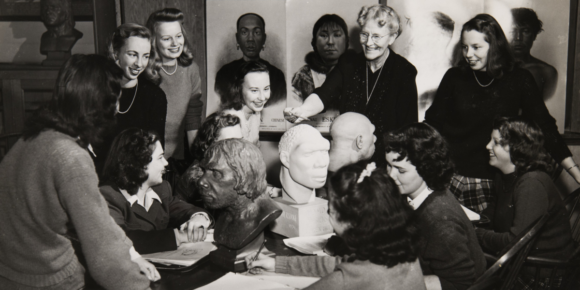
She was a prominent member of many educational organizations, including serving as the President of the National Association of Deans of Women, and at Mount Holyoke, she also fulfilled several other essential offices such as acting as an academic adviser and chairman of the scholarship committee. She remained at Mount Holyoke until her retirement in 1948 aged 64, and articles written at the time of her retirement state that alongside the excavations she attended during her 19 years as Dean she also traveled in Canada, Jamaica, Egypt, Japan, Korea, the Philippines, and Russia. These travels inspired her work promoting scholarships for foreign students at Mount Holyoke, and by her retirement, there were 9 full scholarships for foreign students available each year.
On her retirement, she was made an honorary Doctor of Law. After this she continued traveling, going again to Europe to attend an Anthropology conference in Brussels and visiting the anthropology departments in Colleges around the United States to speak about her work and about women’s education. She continued to regularly attend Mount Holyoke alumni events until her death in Los Angeles on July 7th, 1957, aged 84.
Images courtesy of Mount Holyoke College Archives and Special Collections.
Resources:
https://dla.mtholyoke.edu/exhibits/show/anthromhc/harrietallyn – Mary Lyon’s museum website, biography of Harriett Allyn, and details of some of her work
https://compass.fivecolleges.edu/collections/mount-holyoke-college-collections?type=dismax&islandora_solr_search_navigation=0&cq=Harriett%20Allyn – Mount Holyoke archives and special collections digital resources:
– The Mount Holyoke News, Volume 28, Number 11, November 28, 1941
– Mount Holyoke Alumnae Quarterly, Fall 1957
A Male President for Mount Holyoke College: The Failed Fight to Maintain Female Leadership, 1934-1937 by Ann Karus Meeropol
Written by Isla Lury as part of the TrowelBlazers Digital Fieldwork Project at the Institute of Archaeology, UCL.