Isabel Ramírez Castañeda was one of the first Mexican women to work as an archaeologist and anthropologist. Affiliated with the National Museum (Museo Nacional de Antropología) for most of her career, she carried out ethnological studies on the Nahua folklore of Central Mexico and classified many archaeological collections.
Born in 1879 in Milpa Alta, a small town close to Mexico City, Isabel Ramírez studied to be a primary and preschool teacher at the Escuela Normal de Profesoras and worked as such for a number of years. But in 1906 she received a scholarship and was part of the first generation to study archaeology, history and ethnology at the National Museum of Mexico, the only institution offering these courses at that time. She would be affiliated with the Museum off and on throughout her life.
Between 1907 and 1908 she supported Eduard Seler and later Leopoldo Batres in the collection of the National Museum, classifying and cataloguing over 10,000 artefacts. She continued working there as an assistant, both in the collections and in teaching archaeology, until 1911, when she joined the International School of American Archaeology and Ethnology. This school was established by Franz Boas, Ezequiel Chávez, and Eduard Seler with the aim to conduct research and train the new generation of Mexican archaeologists and ethnologists. Isabel was able to attend thanks to scholarships she secured from the Mexican government and Columbia University, as well as paid leave from the National Museum.
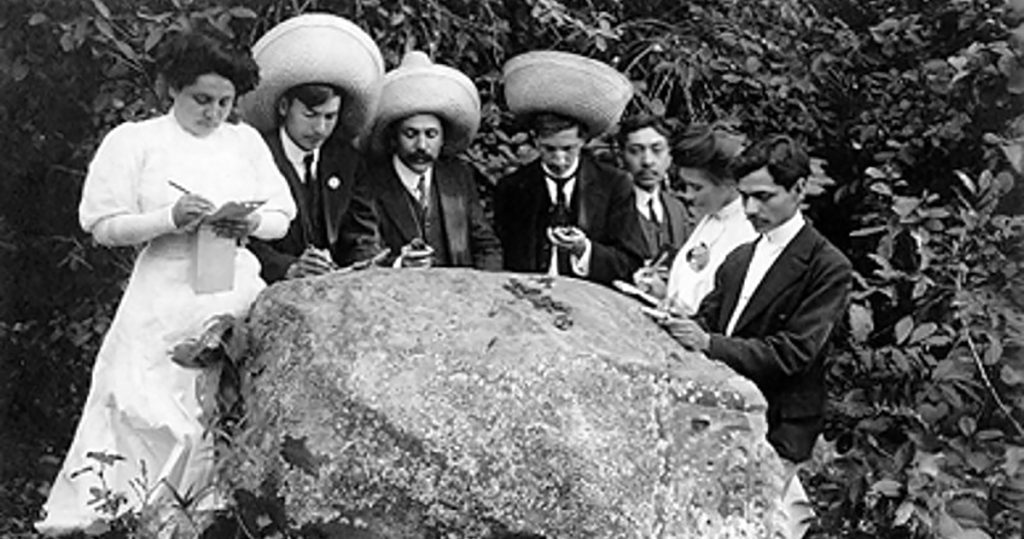
During this time, Isabel accompanied Edward Seler and his wife Caecilie Seler-Sachs to the archaeological expeditions at Palenque and the Yucatan peninsula, conducting fieldwork and surveying and studying different Maya archaeological sites. She also participated in various ethnological field trips to the surrounding areas of Mexico City and carried out the systemic collection of ceramics in the Toltec and Nahua city of Culhuacán.

Isabel Ramírez Castañeda together with other members of the National Museum studying a stone with reliefs during field work at Cerro del Mulato in the State of Morelos, ca. 1910. (Mediateca INAH, Catalogue No. 416846).
Isabel was proficient in written and spoken Nahuatl, although it is unknown if it was her mother tongue or if she learned it during her childhood or as part of her studies in the National Museum. Being bilingual enabled her to carry out important ethnographic work in her hometown of Milpa Alta, as well as other Indigenous Nahua villages near Mexico City. Her ethnographic work mostly consisted of compiling Indigenous stories and myths to later transcribe and translate into Spanish.
Around 1912 it seems there was conflict with the third director of the International School, Georges Engerrand, who complained about her character and ‘vanity’. By 1914, the International School closed down due to the disturbances caused by the Mexican Revolution its then-director, Alfred M. Tozzer, left the country. Isabel was left in charge of securing the school’s collections and transferring them to the National Museum. She remained working in the Museum’s national folklore section, becoming its head in 1918; this promotion was short-lived, however, as later that year her position was eliminated due to a lack of funding. She would not return for almost 20 years.
Not much is known of her years away from the museum, but in 1936, she came back by joining the educational department, devising courses about Mexican archaeology for teachers. Following this, she continued to work for the museum in very low paying positions, mostly from her home due to poor eyesight, until her death in 1943.
The life and work of Isabel Ramírez were conditioned by her gender and the need to support herself economically. At the time, women in archaeology and anthropology had very little manoeuvring space. Their labour was often used as data collectors, assistants, and field workers, but not as analysts or producers of theory. Despite the fact that Isabel’s marital status and family situation is unknown, by pursuing a career as an archaeologist and folklorist she was challenging social norms of the time. She often struggled to acquire the funds to study and work as an archaeologist, depending on precarious positions at the National Museum. Her writing was often not valued by her male professors and peers, criticised for its spelling mistakes and for having more of a literary than a scientific style, one that tended to have pedagogical qualities.
Like other contemporary trowelblazers who worked in Mexican archaeology and anthropology before the Mexican Revolution, such as Zelia Nutall, Caecilie Seler-Sachs, and Adela Bretton, Isabel Ramírez Castañeda had to fight for her place, pushing boundaries to make room for her to study and work in those male-dominated emerging fields. But unlike the others, Isabel was born, raised and educated in Mexico, and appears to not have come from a wealthy family nor have affluent patrons who supported her work. Despite these challenges, Isabel did valuable work, most notably compiling and analysing Indigenous knowledge and stories from the Nahua communities around Mexico City and classifying the archaeological and ethnographic collections of the National Museum. She authored three papers of original research on the precolonial carved stones present at the Tlalnepantla parish church, the Nahua folklore of Milpa Alta, and traditional medicine and superstition in the market of Zumpango. Additionally, three of the folktales she compiled from Milpa Alta and translated from Nahuatl were published by Franz Boas and Herman K. Haeberlin. Isabel is mentioned but not recognized as a co-author.
For decades the contributions of Isabel Ramírez in the development of archaeology and anthropology in Mexico were overshadowed by the focus put on her male colleagues, most notably Manuel Gamio. Fortunately, this has recently changed, restoring her rightful place in history as Mexico’s first woman archaeologist and anthropologist.
Ed. Note: Since the publication of this text, we learned of the existence of at least three other women contemporary to Isabel Ramírez Castañeda who studied ethnology and carried out field work in the Huasteca region of Mexico in August 1908: Luz Islas, María Atienza and Isabel Gamboa. Unfortunately, little is known of them, but they most definitely also share the title of being among the first Mexican women to work as anthropologists.
Works by Isabela Ramírez:
Boas, F., and Haeberlin, H. K. 1924. Ten Folktales in Modern Nahuatl. The Journal of American Folklore, 37(145/146), pp. 345–370.
Engerrand, G., and Ramírez Castañeda, I. 1915. Les simples destinés des usages médicaux ou superstitieux vendus au marché de Zumpango, Méxique. Revue Mensuelle de L’ecole d’Anthropologie de Paris, (XXV), pp. 55–62.
Ramírez Castañeda, I. 1912. Apuntes acerca de los Monumentos de la Parroquia de Tlalnepantla (Excursión arqueológica del día 7 de diciembre de 1907). Anales Del Museo Nacional de Arqueología Historia y Etnología, IV(16), pp. 533–543.
Ramírez Castañeda, I. 1913. El folklore de Milpa Alta, D.F. In International Congress of Americanists. Proceedings of the 18th session, London, 1912 (pp. 352–361). London: Harrison and Sons.
Sources:
Ruiz Martinez, A. 2006. Zelia Nuttall e Isabel Ramírez: las distintas formas de practicar y escribir sobre arqueología en el México de inícios del siglo XX. Cadernos Pagu, (27), 99–133.
Rutsch, M. 2003. Isabel Ramírez Castañeda (1881-1943): una antihistoria de los inicios de la antropología mexicana. Cuicuilco, 10(28), pp. 1–18.
Post by Daniel Salinas Córdova, @DanielSalinas00
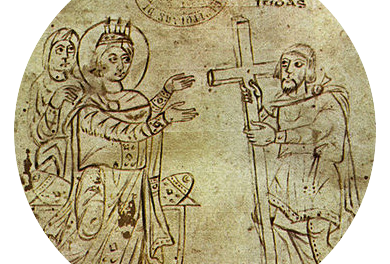
The images of Isabel in the museum and in the field are available via Mediateca of INAH (National Institute of Anthropology and History, Mexico) under CC BY-NC-ND 4.0.