

If Tina Negus had been a boy with scholarly connections, she would now have one of the most important fossils in the world named after her. Instead, her place in the annals of palaeontology is far less well known than it deserves to be. Now a talented artist, poet and photographer, you can see how the young Tina’s gaze would drawn to something unusual about some rocks in Charnwood Forest, Leicestershire, UK.
In the early summer of 1956, a teenage Tina persuaded her parents to visit this area- thanks to her existing interest in geology, sparked as a child-, keen to see for herself the Precambrian rocks there. Now for non-geology types, “Precambrian” might sound pedestrian, but for those who’ve discovered the story of Earth’s past, it has a uniquely exciting ring to it. It’s got a “Pre-” stuck on it because, up until the middle of the 20th century, when Tina was discovering geology, the succeeding Cambrian period was believed to be when animal life started. Tina, busy checking out an overgrown, little-visited quarry for sub-marine volcanic deposits, was under the same impression. However, she recounts that soon into her examination of the rock face while her family picked berries, she noticed a fossil on the surface, which looked distinctly fern-like, yet had a bizarre appearance, without a central stalk.

Charnia masoni, type fossil, Leicester Museum. Photography: Tina Negus, used with permission.
Intrigued by this contradiction of something apparently once alive existing before life began, Tina tried to find out more, but came up against brick walls. When approached, her geography teacher flatly refused to believe that she knew what she was talking about (it either wasn’t a fossil or the rocks weren’t Precambrian). Tina also, now unsurprisingly, came up with nothing in her own researches in books and at a local museum. She kept the rubbing she took, but wanted to return again to “her” fossil.
When she went back to the quarry the following year however, it had disappeared, obviously removed from the rock face. Disappointed, she forgot about it, though her fascination for geology didn’t wane, despite being refused permission to study it for her final school qualifications. It was only later that Tina discovered someone else had recognised the “foreign” frondy fossil in the rocks at Charnwood- only, that someone else had been believed.

Charnwood Quarry, original artwork by Tina Negus. Used with kind permission.
Just one year after Tina first noticed the fossil and took her rubbing, and just before her final visit when she found it had been removed, another teenager with some geological knowledge had seen and reported it. Roger Mason’s story is told elsewhere (see this video of him speaking), and, long story short, he happened to have family connections with an academic geologist who recognised as genuine the rubbings he had also made. The outcome of this was a scientific paper reporting the incredible discovery of life in the Precambrian, an eventual career as a professor of geology for Roger – oh, and the fossil itself named after him: Charnia masoni.
After this first publication, more and more examples of fossils from rocks of this very ancient age were identified around the world, and it became known as the Ediacaran fauna, after a region in Australia. While Charnwood is still one of the most accessible to visitors today, other more spectacular sites exist, including Mistaken Point in Newfoundland, where the preservation is astonishing (podcast and great photos from Palaeocast on this locality).

Ediacaran Life. Original artwork by Tina Negus, used with kind permission.
Tina discovered the fate of her missing fossil in 1961 while studying Zoology, Botany and Geography at university: she took her rubbing to the geology department, who told her it had in fact been published. Much later, in 2004, she saw on television a program featuring Roger Mason in the quarry talking about the find, and contacted him. This put in motion events that culminated in Tina’s contribution being recognized at the celebrations for the 50th anniversary of the Charnia discovery, complete with her cutting a fossil cake with Roger.
Obviously no-one can know whether Tina would have ended up pursuing geology professionally like Roger if she had encountered supportive teachers instead of disparagement, but at the least her discovery would be widely noted in accounts of the Ediacaran fauna, and she would now have the first known Precambrian fossil named after her. She is quietly proud of her discovery, and feels vindicated now her story is at least acknowledged to be true. She also continues to be fascinated by geology and palaeontology, which she explores through her other artistic passions. While we at TrowelBlazers can’t quite manage the re-naming of Charnia to negusi, hopefully this post goes some way towards wider recognition of her place as a key trowelblazer in the history of palaeontology.
Written and posted by Becky (@LeMoustier)
Our grateful thanks to Tina Negus for the information this post is based on, and her kind permission to use the images featured.


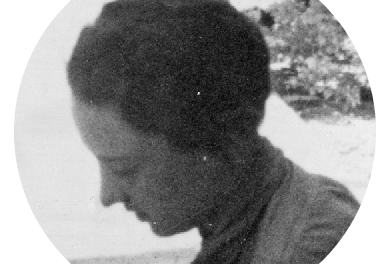


Tina has been overlooked for far too long in respect to this matter. Thank you Becky for starting to redress the balance.
shows how encouragement and interest in a child, rather than discouragement can make a difference. Well she found it! And hopefully she will be recognized for it.
I am giving a talk on the ediacaran to my U3A geology group in Dartmouth next week and will mention Tina and her part in this story. I will also show her lovely art.
i have a few fossils of a shape,circular with concentric decreasing rings,slightly convex 2mm diameter with a small cone in the centre.
i found it about 35 years ago in Silurian deposits of the north Esk inlier of Scotland.I assumed as a complete amateur it was a kind of base for a Charnia like fossil but now realise Charnia may not of survived to this period.
So happy to discover this site! Would anyone be able to tell me how to contact Tina Negus? I am a Poet,retired Registered Nurse,and lifelong amateur geologist. During research for my poem I first found mention of Charnia and Tina, and would like to dedicate the poem to TIna. Any help would be greatly appreciated.
I continue a friendship online with Margaret, thanks to Becky and Trowelblazers!
A great site.
I know it’s irrational, but this story makes my blood boil. At least it can teach us to be wary of ignorance and prejudice.
I have just seen a comment on my Trowelblazers site from Margaret Fox. She wanted to contact me. If you could either pass her email address to me or give her mine, I would be most grateful.
I searched Tina Negus after David Attenborough mentioned that the Chadian fossil had been discovered by “a student of his school”. When the student was un-named I suspected something fishy. I hope Tina Negus hasn’t been a victim of academic chauvinism. Surely not Sir David.
Seems there should be a name change for the fossil.
No I do not think the name should be changed. Roger brought the fossil into recognition. I did not because I had no idea how to go about it.
It absolutely was chauvinism and sexism, plain and simple. It’s a common resonse to women who try to be taken seriously in fields men think they own. Who was responsible for telling her to shut her mouth, and forbidding her from studying her passion, I don’t know. Shame on them whoever they are. Sadly the rules of scientific nomeclature forbid renaming species, even in situations like this. Even species comically misnamed for a location where they never lived still keep those silly names. Even a series of invertebrates named “Oh kiss me.”
No I do not think it was chauvinism or sexism, just ignorance and complete faith in the accepted story of the day…
Tina
As a retired (male) geologist-geostatistician I can vouch for the lack of believing female geologists… Made the same mistake myself I am sure. Facts prove that females been outstanding scientists and contributors in ALL fields of research, and often had/have to fight very hard to be recognised. It is time we recognise our shortcomings and at least say sorry.
Hello there.
I really enjoyed reading through this Trowelblazers article.
My name is Trevor Stephenson and I am a Middle School STEM teacher in Adelaide, South Australia.
We are fortunate to have an abundance of Ediacaran fossils in the Flinders Ranges (about 6 hours north of Adelaide CBD) and Tina’s story forms part of our introduction to the Year 8 Ediacaran teaching unit.
I know that my students would be thrilled to write to her – especially those studying the Charnia Negus.
Is there any chance of contacting Tina?
Kind regards.
*Sorry – Charnia Masoni.
I find Tina’s connection to the land captivating, as a conservationist working in the Charnwood. I still too am finding a way to revere these spiritual lands.
I work as part of a mindful charity and would like to ask for communication/permission to do a talk/exhibition on her work and life.
I’m also trying to purchase a copy of ‘on the other side’ if anybody can help that would be greatly appreciated.
Tina has a Flickr page with her art and photography, you may be able to contact her through that.
Thanks, Trowel blazers – this is a fascinating article.
I am a Middle School teacher in Adelaide – about 600 km south of the Ediacara hills.
Tina’s story forms part of our introduction to the Ediacaran Fossil unit in Year 8 Geology.
Does anyone know the whereabouts of the original Charnia fossil she found? I assume it is housed in one of the museums?
Regards,
Trevor.