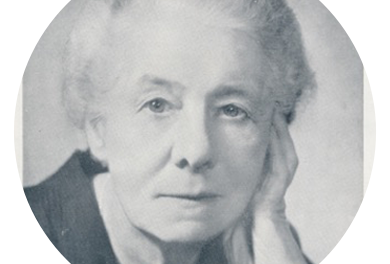
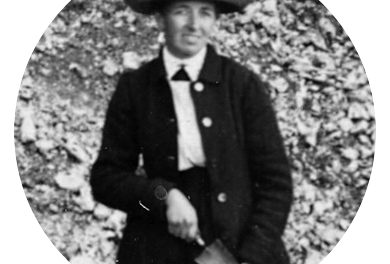
Carrie Barbour’s (1861-1942) palaeontological career began when she followed her brother, Erwin H. Barbour, to the University of Nebraska in 1893. Erwin had been hired as a professor and curator, and quickly realized that the University of Nebraska State Museum collections required more attention, and that he needed his sister’s assistance. Both siblings had inherited a passion for natural history from their mother, Adeline Hinckley Barbour, and so it was no surprise that they grew up to be palaeontologists. Ironically, Carrie Barbour had been forced by her family to leave Oxford Female College as a young woman on the grounds that she was too physically weak to continue her arts studies. This led her on a path to science and palaeontology, where she routinely would have exerted herself mentally and physically: studying science, lifting heavy rocks and bones, and even conducting field work in what would eventually become the Agate Fossil Beds National Monument in Nebraska, USA.
Carrie Barbour started at the Museum as a part-time fossil preparator, carefully extracting bones from their rocky matrix and arranging them for display. Within a few months she had quit her other career as an art professor to devote all her time to the museum. At the University of Nebraska, she began to study the sciences with fervor, and taught summers at Washington University’s biological station on Friday Harbor in Puget Sound. By 1912, she was a palaeontology professor at the University of Nebraska and an assistant curator of Morrill Hall (the palaeontology collections of the University of Nebraska State Museum). She was often called upon to identify fossils found in the state, and once identified mammoth bones in a woman’s cellar in the city of Lincoln, NE.
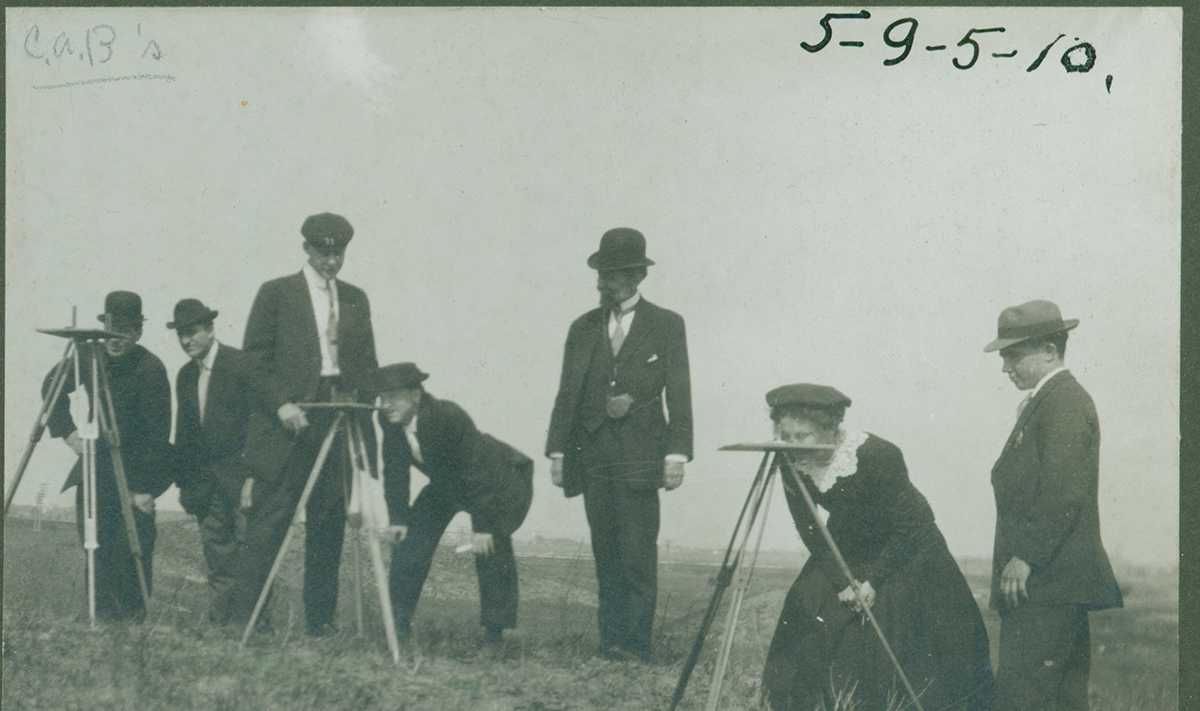
Carrie Barbour’s work was greatly appreciated in her time; not only did she do field work and prepare specimens for study and display; she also meticulously catalogued the museum’s invertebrate collection, and co-authored research papers on the geology and palaeontology of Nebraska. She and her brother understood the significance of the mammal fossils in Nebraska and dedicated their lives to building the foundations of palaeontological research in the state.
By Brigid Christison (@Brigidomorpha on twitter; brigidchristison.wordpress.com/)
Sources:
Lois B Arnold, “The Barbours: A Family in Paleontology,” Nebraska History 94 (2013): 176-187
https://www.askart.com/artist_bio/Carrie_Adeline_Barbour/10002641/Carrie_Adeline_Barbour.aspx#
http://sandhillsarchive.unl.edu/project/carrie-a-barbour/
http://paleosleuths.org/erwin_barbour.html
Images used with permission from University of Nebraska-Lincoln Archives and can be accessed here.