Mamá, arqueóloga de campo y descubridora de vestigios de los antiguos Mesoamericanos
Kary Dimas es una artista de la excavación arqueológica. A la hora de excavar pasa largos ratos en posiciones incómodas sin decir mucho, sus movimientos con la cucharilla son precisos e incansables. Después de un rato, nota un cambio estratigráfico y comenta: “aquí suena diferente”. Poco a poco, un piso prehispánico de tierra apenas perceptible bajo el escombro se vuelve claro. Son las diez de la mañana en la cima de un cerro, el sol ya quema, pero el xamati hace lo suyo.
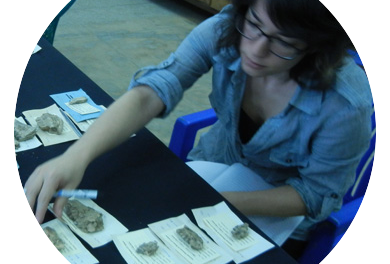
Kary es mamá de Katherin, es fan del anime japonés, pero también es una mujer otomí con siete años de experiencia en la arqueología de campo. En ese tiempo, ella ha excavado distintos tipos de contextos como la arquitectura ceremonial y doméstica, entierros humanos y ofrendas ceremoniales. También participa del registro de plantas estratigráficas, fotográfico, de niveles topográficos y recientemente comienza a aprender el manejo del dron. Cuando alguien duda sobre un cambio estratigráfico, el equipo confía en ella para evaluar la situación y confirmar o descartar el cambio. Karina también comparte sus habilidades y experiencia con los estudiantes sobre el uso adecuado de los instrumentos y las finezas del registro.
Su carrera comenzó en 2011 en las excavaciones del Pahñú, un sitio mesoamericano ubicado en la cima de un cerro en el Valle del Mezquital, México. Kary se unió al proyecto por medio de un programa del gobierno para emplear temporalmente a gente de La Mesilla, una comunidad cercana al sitio, para colaborar en los trabajos arqueológicos. En poco tiempo, aprendió a definir y registrar estratos arqueológicos, habilidades que fue perfeccionando a lo largo de los seis meses de la temporada. Aunque lo mismo se puede decir de los casi cien trabajadores de la comunidad de La Mesilla que se unieron al proyecto y de los seis arqueólogos de la Escuela Nacional de Antropología e Historia también contratados temporalmente. Paradójicamente, el reconocimiento de un trabajo en equipo se otorgó a algunos burócratas con poca o ninguna experiencia en la arqueología de campo.
La naturaleza temporal del proyecto, así como otros factores, hicieron que muchos de los trabajadores emigraran a Estados Unidos. Mucho de ese talento arqueológico se dejó de cultivar. Kary se mudó por algún tiempo a trabajar en la Ciudad de México, tiempo después regresó a La Mesilla pues se convirtió en mamá. En 2017 retomó su carrera arqueológica en las exploraciones de Zethé, otro centro ceremonial mesoamericano en el Valle del Mezquital. Esa temporada, Kary manejaba una camioneta diariamente para trasladar a los trabajadores de La Mesilla al rancho del Zethé. En 2019 volvió a Pahñú a excavar contextos domésticos. De todo esto, ella recuerda cuando descubrió una máscara de cráneo pues “era la primera vez que excavaba algo así”. También recuerda con gusto cuando trabajaba con Martín y Don Rubén, dos amigos de La Mesilla, pues “cuando excavábamos juntos nos ayudamos y nos dábamos opiniones sobre lo que encontrábamos”.
Kary Dimas se ha vuelto indispensable en el equipo de excavación para investigar una cultura poco conocida en los límites norteños de Mesoamérica. Esto ha generado tensiones con algunos ejidatarios que consideran que los trabajos de excavación exclusivamente deberían ser asignados a los propietarios de tierras cultivables o sus parientes masculinos. Afortunadamente, hay varias personas que reconocen el talento y la habilidad de Karina para el trabajo arqueológico y defienden su derecho, así como el de otras mujeres de La Mesilla para colaborar en las excavaciones.
Para muchos, la arqueología es una carrera en ruinas. Sin embargo, Kary considera que hay varios aspectos positivos de su experiencia de campo: “Hay tantas cosas que he aprendido que jamás creí conocer o ver” Y posteriormente agrega: “¿Cuántas personas que no han estudiado pueden excavar un entierro? Y cada vez que me invitan a trabajar aprendo algo nuevo que con el tiempo podré contárselo a mi hija y mi familia.” No sabemos qué dirá la pequeña de ocho años sobre esas historias. Por ahora, queremos reconocer públicamente el trabajo de una compañera y amiga de excavación. Gracias por permitirnos contar tu historia.
*Xamati: Sombrero de la zona del Valle del Mezquital tejido en fibras de árbol de palma.
Texto: Gustavo Sandoval y Sabrina Farias (revisado por Kary Dimas).
Fotos: Sabrina Farias.
English Version
Mum, field archaeologists and discoverer of the footsteps of ancient Mesoamericans.
Kary Dimas is an artist with a trowel. While digging, she does not say much. She spends long periods in uncomfortable positions, but her trowel strikes the terrain endlessly with great precision. After a while, she notices a stratigraphic change and comments: “it sounds distinct here”. Little by little, a pre-hispanic earth floor, barely perceptible under the rubble, becomes clear. It is 10 a.m. on a hilltop; the sun already burns but the xamati does its thing.
Kary is Katherin’s mum. She is also a die-hard fan of Japanese anime and an Otomí woman with seven years of experience in field archaeology. Throughout that time, she has become experienced in different excavation contexts as ceremonial and domestic architecture, burials, and offerings. Likewise, she has mastered distinct forms of recording like plan drawing, topographic levels, photography and sorting out finds and samples. More recently, she started practicing drone flying. When somebody doubts the definition of a context, the team trusts her to test the terrain and assess the situation. She also shares her skills and experience with students to handle instruments properly and advise on the subtleties of recording.
Her career began in 2011 in the large-scale excavation at Pahñú, a Mesoamerican site on a hilltop in the Mezquital Valley, México. She joined the project through a government program of temporary jobs for people from La Mesilla, the nearest community to the site, to collaborate with the archaeological works before opening the site to the public. In a short time, she learned the craft of digging and recording, which she refined over the following six months. But the same applies to the other workers that joined the project and the six archaeologists from the Escuela Nacional de Antropología e Historia that were hired temporarily. Ironically, the acknowledgement of collective work was granted to a few bureaucrats with low or none field experience.
Due to the temporary nature of the project and other factors, many workers from La Mesilla migrated sometime later to the United States. Kary moved to work in Mexico City for a short period, but she settled back in La Mesilla when she became a mother. She restarted her career in 2017 for the explorations of El Zethé, another Mesoamerican ceremonial centre located on a hilltop in the Mezquital Valley. At that time, she was in charge of driving a van every day for transporting the workers from La Mesilla to El Zethé ranch. She came back to Pahñú in 2019 to dig domestic contexts. Of all this, she remembers the time when she discovered a skull mask near the main pyramid temple: “it was the first time I dug something like that”. She also gladly remembers when she worked alongside Martin and Don Ruben, two teammates and friends from La Mesilla: “when we dug together, we helped each other and exchanged opinions about what we found”.
Kary Dimas has become essential for the excavation team in the investigations of a little-known culture in the northern boundaries of Mesoamerica. This also has produced some tensions with ejidatarios that think that excavation assistant jobs should be given to landlords of agricultural lands and their male relatives. Fortunately, there are many people that acknowledge Kary’s talent and skill for the job and defend her right, as well as that of other women from La Mesilla, to collaborate in the excavations.
For many, archaeology is a career in ruins. Kary, however, remarks on some positive aspects in her archaeological experience: “There are many things that I have learned and never thought I would know or see”. Later she adds: “How many people that have not studied can dig a burial? And every time they invite me to work, I learn something new that later I can relate to my daughter and family”. We do not know what the little girl will think about those histories. For now, we want to thank Kary for sharing her skills in the field and allowing us to tell her story. Let this be a small acknowledgement of your work.
xamati : a hat from the Mezquital Valley weaved in palm tree fiber, worn in the image of Kary Dimas here.
Text: Gustavo Sandoval and Sabrina Farias
Pictures: Sabrina Farias and used with permission