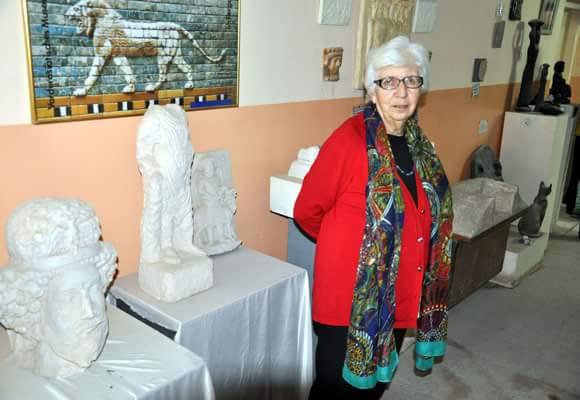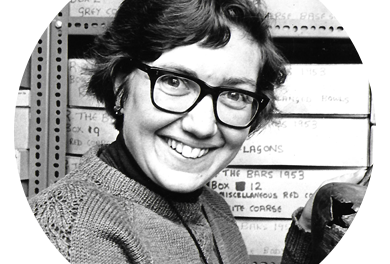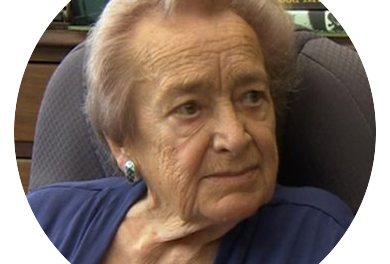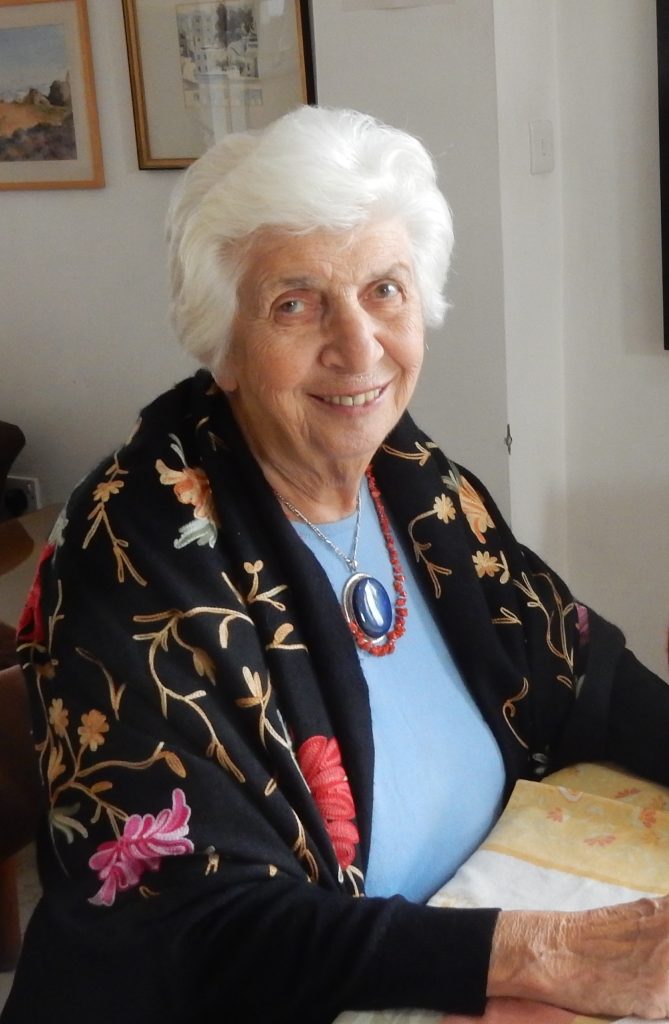
Lamia Al-Gailani Werr لمياء الكيلاني (8 March 1938 – 18 January 2019) was one of Iraq’s first female archaeologists, an expert on Mesopotamian cylinder seals, and an outspoken advocate of the protection of her country’s cultural heritage.
Born and raised in Iraq, Lamia’s career in archaeology began at the University of Baghdad, where she studied briefly. In defiance of her family’s wishes that she get married and settle down in her home town, she transferred to the University of Cambridge on a scholarship, becoming the first Iraqi woman to study archaeology abroad. Upon graduating, Lamia returned to Iraq in 1961 to work as a curator at the Baghdad Antiquities Museum established by Gertrude Bell, which was renamed Iraq Museum in 1966. One of Lamia’s main responsibilities as curator was to make clay impressions of the museum’s collection of Mesopotamian cylinder seals, which would become one of her lifelong interests. During this period, Lamia also conducted excavations at Tell edh-Dhiba’i, as one of the few female directors of archaeological excavations at the time. She described her experience working as a female archaeologist in Iraq in the 1960s as follows:
“As a newly graduate(d) archaeologist, my ambition was to go out digging, but being a woman was an obstacle in conservative Iraq. Being a first, I need to convince the authorities I could do it. (The) then Director of Antiquities Taha Baqir, being true to his liberal policies, agreed to let me go into the field as long as I excavated within the vicinity of Baghdad. My family was happy about that, because it meant that I would still be living at home”. (Curtis 2019, 4)
Lamia returned to the UK in the 1970s, obtaining a MA degree from the University of Edinburgh, then a PhD from the Institute of Archaeology, then under the University of London. She is the first Iraqi woman to earn a doctorate in archaeology, and her thesis on the chronology and regional style of Old Babylonian cylinder seals, supervised by Barbara Parker-Mallowan, is considered a foundational work in the study of Mesopotamian cylinder seals and glyptic styles.
Following her PhD, Lamia remained in the UK and became a research associate in the Department of the Languages and Cultures of the Near and Middle East at the School of Oriental and African Studies. She returned frequently to Iraq, acting as the key point of contact between Iraqi archaeologists, then working under Saddam Hussein’s regime, and British archaeologists. Much of her research continued to focus on Mesopotamian cylinder seals, and she worked closely with other experts on the topic, including Edith Porada, Barbara Parker-Mallowan, and Dominique Collon. She also co-authored The First Arabs in 1999, which was written in Arabic and concerned the archaeology of Arab culture in Mesopotamia in the 6th through 9th centuries. According to her daughter, Lamia would bring copies of this book with her on her visits to Iraq and sell them through a vendor on Mutanabbi Street, often regarded as the centre of the country’s intellectual life.

Lamia giving a lecture on “The First Arabs in the Fertile Crescent” in 2002. Image provided by Al-Furqan Islamic Heritage Foundation and used with permission.
In the aftermath of the US-led invasion of Iraq and subsequent looting of the Iraq Museum in 2003, Lamia returned to Baghdad to assist her colleagues at the museum in retrieving the stolen artefacts and assessing and repairing damages. She became a vocal critic of the destruction of heritage and museums in Iraq, and much of her later work focused on the preservation and protection of antiquities. She also worked as consultant to the Iraqi Ministry of Culture, and it was her ability to bridge Iraqi archaeology with the English-speaking academic world that helped galvanise the international effort resulting in the return of one-third of stolen artefacts and the reopening of the Iraq Museum in 2015.
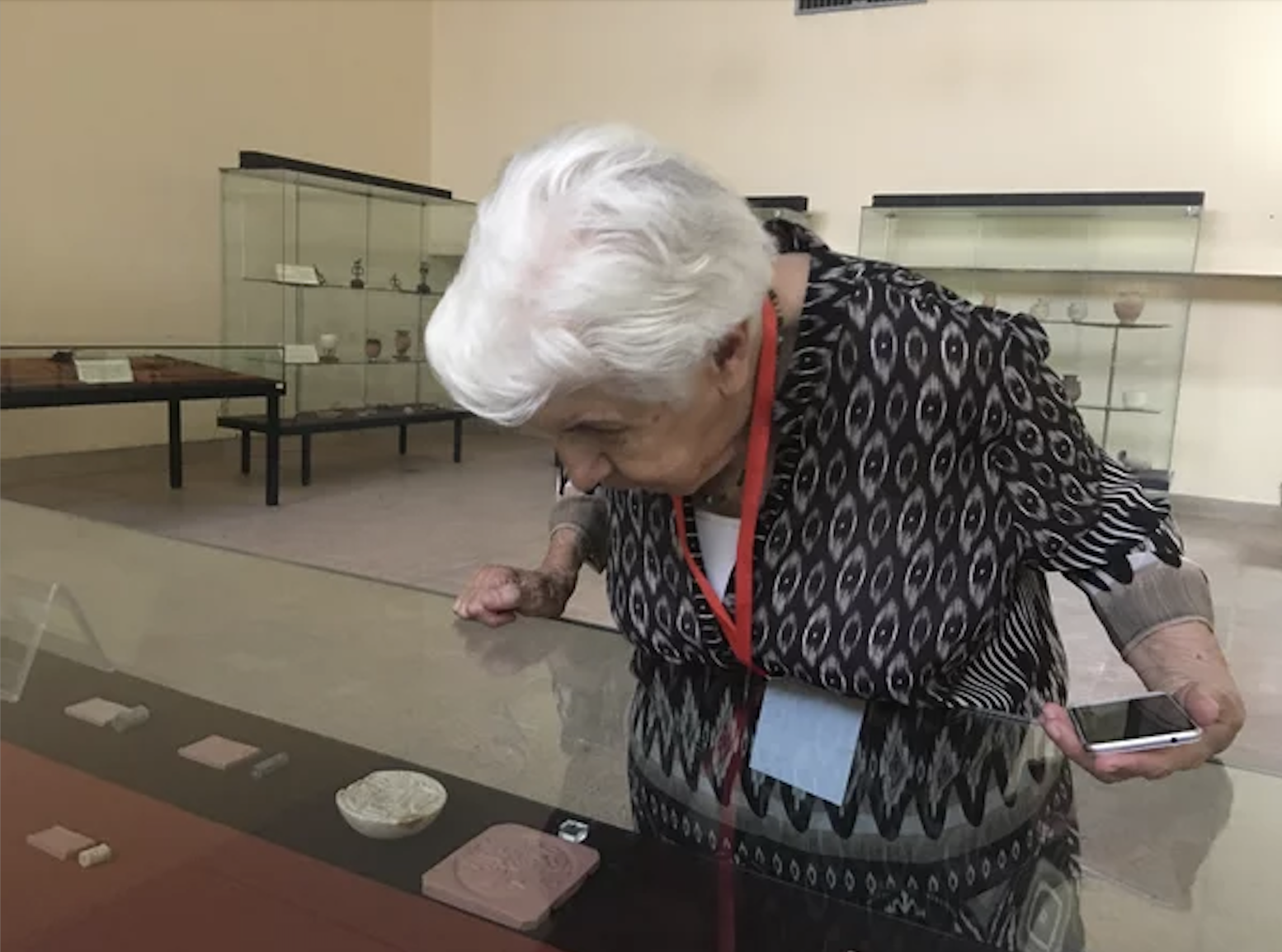
Lamia looking at the cylinder seals displayed at the Iraq Museum. Image provided by NPR and used with permission.
Lamia was also a key figure in the founding and development of the Basrah Museum, hand-selecting the cylinder seals for the displays there and training museum staff alongside her daughter, Dr Noorah Al-Gailani.
In 2009, Lamia was awarded the Gertrude Bell Memorial Gold Medal “for outstanding services to Mesopotamian archaeology” by the British Institute for the Study of Iraq – she is the fifth recipient of this medal and the first woman to have achieved such an honour. Later on Lamia was also Honorary Research Associate at UCL Institute of Archaeology and, most recently, a visiting fellow at the Metropolitan Museum of Art in New York.
Lamia passed away in 2019 at the age of 80; she had suffered a stroke while holding a workshop in Amman, Jordan, to train Iraqi curators. At the time of her death, she had been working on a book about the history of the Iraq Museum – her ability to understand both English and Arabic sources and her experience working in and with the museum throughout her career meant that she had been the most suitable person for the task. It is hoped that the book, for which she had already assembled a great deal of information, will someday be completed.
“My mother’s love of history is from her childhood. Her value for it and the importance of knowing humanity through its cultural identity and civilization pushed her to study archaeology and history in general and Iraqi archaeology specifically.” – Noorah Al-Gailani, at Lamia’s memorial in the Iraq Museum (Arraf 2019)
References and further reading
Arraf, J., 2019. Remembering Lamia Al-Gailani, Pioneering Iraqi Archaeologist. NPR, Available at: https://www.npr.org/2019/02/02/689933122/remembering-lamia-al-gailani-pioneering-iraqi-archaeologist
Collins, P. and MacIver, J., 2019. Dr Lamia Al Gailani Werr | The British Institute for the Study of Iraq. bisi.ac.uk. Available at: http://www.bisi.ac.uk/content/dr-lamia-al-gailani-werr
Curits, J., 2019. Lamia Al-Gailani Werr (1938-2019). Iraq 81, 3-5.
Ditmars, H., 2019. ‘The Rose of Baghdad’: Lamia al-Gailani-Werr, defender of Iraq’s heritage. Middle East Eye, Available at: https://www.middleeasteye.net/discover/rose-baghdad-lamia-al-gailani-werr-defender-iraqs-heritage
Sandomir, R., 2019. Lamia Al-Gailani Werr, 80, Dies; Archaeologist Rescued Iraqi Art. The New York Times, Available at: https://www.nytimes.com/2019/01/25/obituaries/lamia-al-gailani-werr-80-dies-archaeologist-rescued-iraqi-art.html
Guest post by Eponine Wong as part of the 2021 UCL TrowelBlazers Digital Fieldwork Project.