
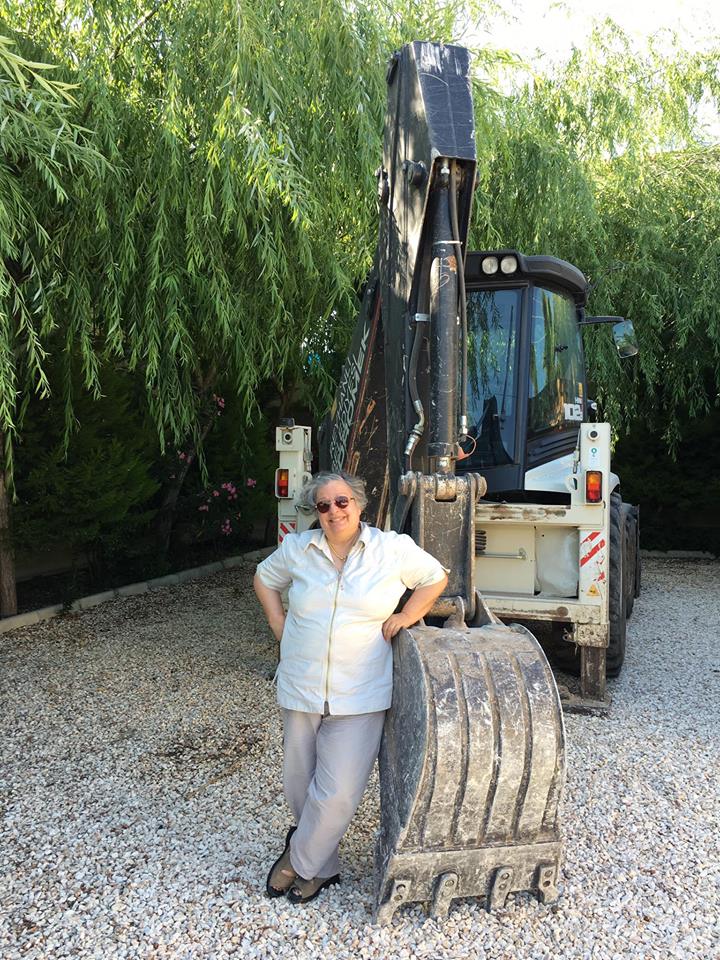
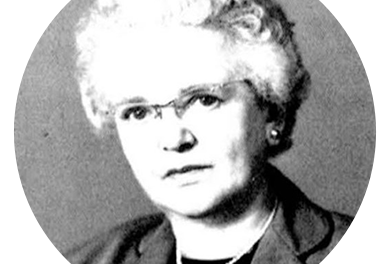
K. Aslıhan Yener has been overturning disadvantages and scientific certainties all her life. In the course of her long and distinguished career, she has revolutionised our knowledge of ancient mining and the production and use of metals in the Chalcolithic and Bronze Ages in Anatolia and the wider Ancient Near East.
Yener studied chemistry at Adelphi College, liberal Arts at Robert College (now Boğaziçi University) in Istanbul, and finally archaeology at Columbia University in New York under Edith Porada and Louise Bordaz.
This fusion of methods and collaboration across disciplines has characterised her career, never taking anything for granted and always looking for a new viewpoint. She earned her fieldwork stripes at Erbaba Höyük and Ikiztepe, before starting her own research project. By then Associate Professor at Boğaziçi University, she found an enthusiastic partner in Hadi Özbal, professor of chemistry at Boğaziçi University. Drawing in yet another discipline, Yener assembled a team of geologists from MTA, the Turkish General Directorate of Mineral Research and Exploration to search for ancient silver mines. As lead isotope analysis, needed to identify the fingerprint of the original mine, was not available in Turkey, Yener returned to the United States once again, this time to the Smithsonian Institution in collaboration with NIST (National Institute of Science and Technology) to analyse the polymetallic lead-containing ores she had collected during her surveys all over Turkey.
The unexpected discovery of high quantities of tin in her analyses led to excavations at Early Bronze Age Göltepe and Kestel Mine. These excavations, exploring for the first time a source of tin in Anatolia, caused a stir in archaeology and made the cover of Science in 1989 (Vol. 244, issue 4901). After decades of doubt by scholars, a second tin source at Hisarcik was discovered near Kayseri. These mines and settlements coupled with the results of lead isotope analysis revealed a powerful third millennium BC trade network intra-Anatolia prior to the arrival of Assyrian merchants in the second millennium.
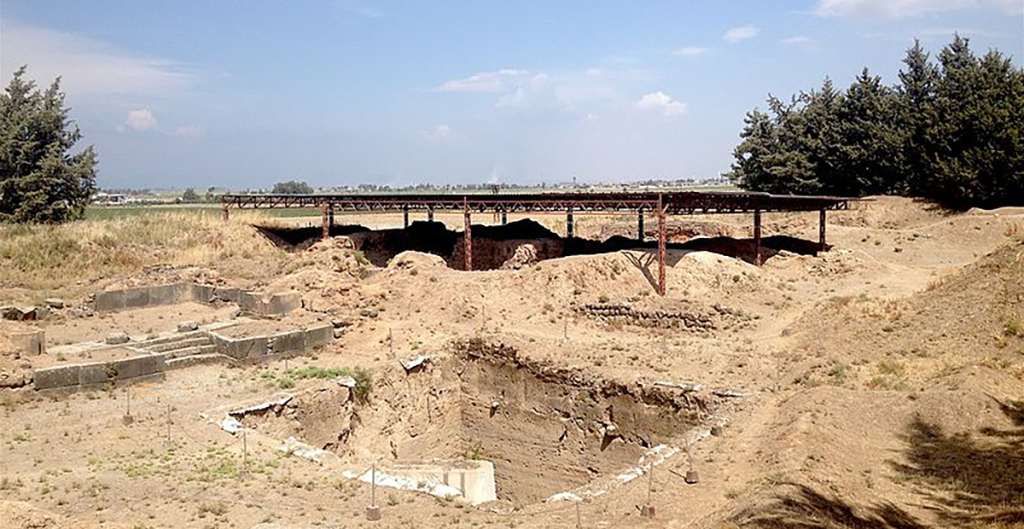
With her appointment as Associate Professor of Archaeology at the Oriental Institute of the University in Chicago in 1993 came the legacy of Robert Braidwood’s seminal survey of the Amuq Valley in southern Turkey. Yener revived the project and with Tony Wilkinson as field director applied new technology in environmental research embedding the now over 400 sites in a broader, regional perspective. In 2000 she also re-initiated excavations at Tell Atchana/ancient Alalakh the Bronze Age regional capital in the Valley, previously excavated by Charles Leonard Woolley from 1936–39 and 1946–49. Excavations under Yener’s directorship continue to this day, and Yener took the project with her on her appointment as Professor of Archaeology at Koç University in Istanbul in 2009. Fine-tuning the chronology of this pivotal site, new assessments aided in re-dating the MB II frescoes and LB II Hittite regional dynasties.
Over the years, K. Aslıhan Yener has supervised and inspired countless students to take up work in all aspects of archaeology and its affiliated disciplines. Her interdisciplinary and collaborative approach and her generosity in providing access to research material have been defining influences for the careers of many young scholars who carry on her legacy.
Post submitted by Hélène Maloigne @hmaloigne
Edited by Brenna
Photo by Murat Akar and used with permission.


Aslihan is a Trowelblazer indeed and she has served as an inspiration for me and many women in the field of archaeology as well as in other disciplines. Her integrity, perseverance, collegiality, vast knowledge of prehistoric civilizations – and not insignificantly infectious humor and unforgettable laugh – set her apart. Thanks for this! Elizabeth Williams Forte
I have been a long-time friend and admirer of Aslihan.
She is one of a kind.
Sel
Dear Aslihan,
It was good to read about you and hear that you are OK. I remember your “discussion” with Malamat about tin. I congratulate for the listing as a trailblazer. Women are often deleted from the list of archaeologists.
Stay safe and be well,
Karen Nemet-Nemet
Aslihan gave me the opportunity to discover Turkey while allowing me to support the immensely important task of training and educating women from many countries. Uncalculable consequences for cultural and societal betterment everywhere in the world stem from her work. Witness the deep concern for women and their education in Afghanistan now in headlines worldwide. Thank you Aslihan, from all of us.