
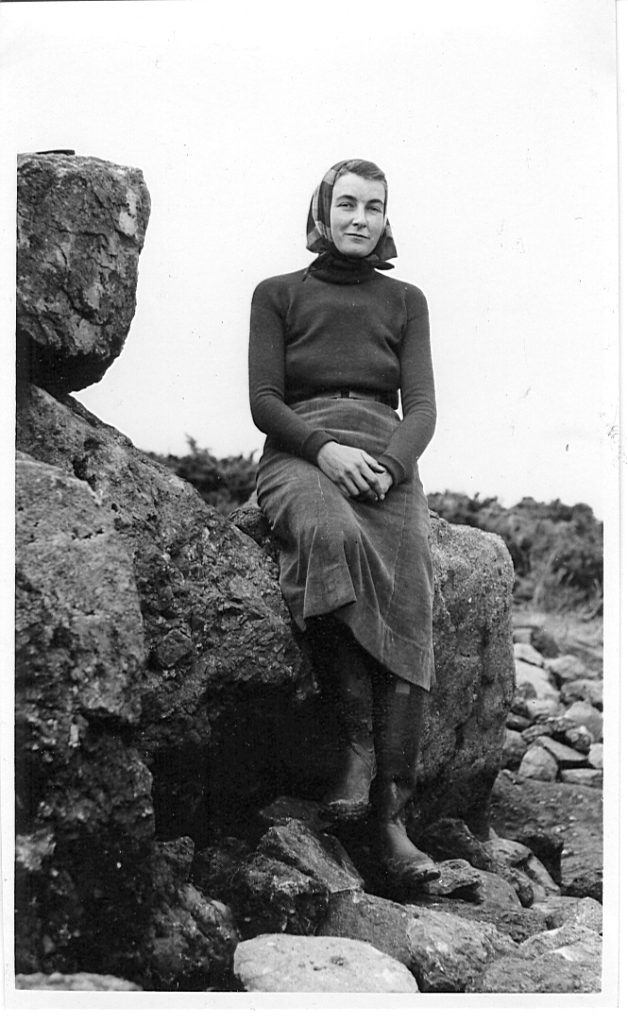
At the age of nine, Jacquetta Hopkins wrote an essay on her chosen future profession-archaeology. When she learned that her house was built on an Anglo-Saxon graveyard, and was then forbidden to dig it up, she snuck out at night with a flashlight and a trowel and dug a hole anyway.
Jacquetta was the first woman to enroll in the first-ever archaeology and anthropology course run at Cambridge University (naturally). At the end of her second year, she joined her first excavation, directed by the brilliant academic (and her future husband) Christopher Hawkes. She then headed off to the 1932 excavation season at Mount Carmel in Palestine, led by Dorothy Garrod, where she was digging alongside Yusra when the Neanderthal fossil Tabun 1 was discovered. By 1939 Jacquetta was directing her own excavation in Ireland and had published her first book, The Archaeology of Jersey.
Jacquetta was described as quick-tempered, outspoken, and difficult, but also as inspirational, quick to apologize, and loving. In 1953 her marriage to Hawkes was dissolved and she married the writer J.B. Priestley. Aside from a 1956 excavation of the Mottistone Longstone on the Isle of Wight, during this time she turned primarily to writing about archaeology as well as authoring a number of literary works.
In Dawn of the Gods (1968) Jacquetta was one of the first archaeologists to suggest that the ancient Minoans might have been ruled by women. She noted that very little (if any) evidence of a Minoan male ruler existed and that images of strong and powerful women abound in Minoan art, where both men and women are shown provocatively and elegantly dressed and seem to move on equal terms.
In 1971 in recognition of all she had achieved, she was made vice-president of the Council for British Archaeology. In the 1980s, she collaborated with a young archaeologist called Paul Bahn, and the resulting Shell Guide to British Archaeology brought the subject to a wide audience. In her 1996 obituary, Bahn wrote, “Jacquetta appeared on the surface to be austere, very formal, and rather cold and distant; but one soon became aware that, in reality, she was somewhat shy and very gracious, kind and generous.”
Her work was rooted in prehistory, and her approach was humanistic. As she said in perhaps one of her most resonant quotes, “Let us have the courage to accept the inner experience that tells us we are something more and that we may be part of a process much greater still,” a statement that sits comfortably with the modern study of prehistory.
Written by Katy Bell (@kambell78)
Edited and posted by Suzie (@suzie_birch)
Want to know more? It just so happens that Gallery II at the University of Bradford is hosting Pots Before Words, an exhibition of works by artist Kate Morrell engaging with the life of Jacquetta Hawkes. It runs from 10 April-22 May 2014.

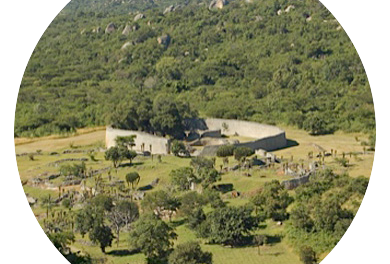

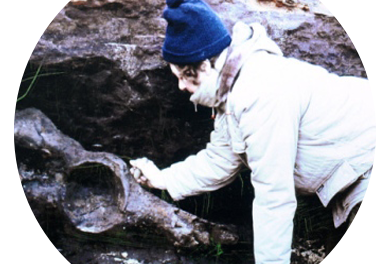


Hawkes was not the first archaeologist to claim the Minoans were matriarchal and ruled by women, that dubious honour probably goes to archaeologist and excavator of Knossos Sir Arthur Evans (early 20th century), who built his career on this premise largely based visual evidence (frescos) and on theories about prehistoric matriarchy in social evolutionary theory at that time.