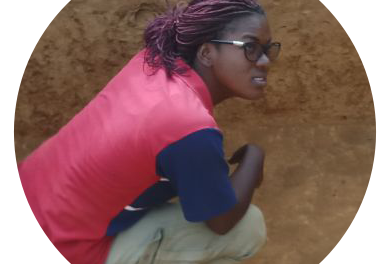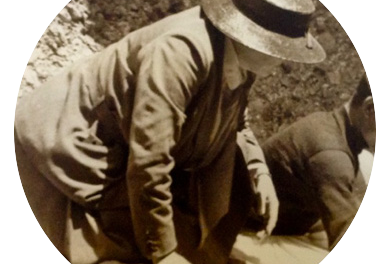
We have not one but two great pieces to share on the pioneering contributions of Intisar Soghayroun el-Zein, the first by Lucy Moore as part of the Women in African Archaeology series, and the second by Brendan Tuttle.
—
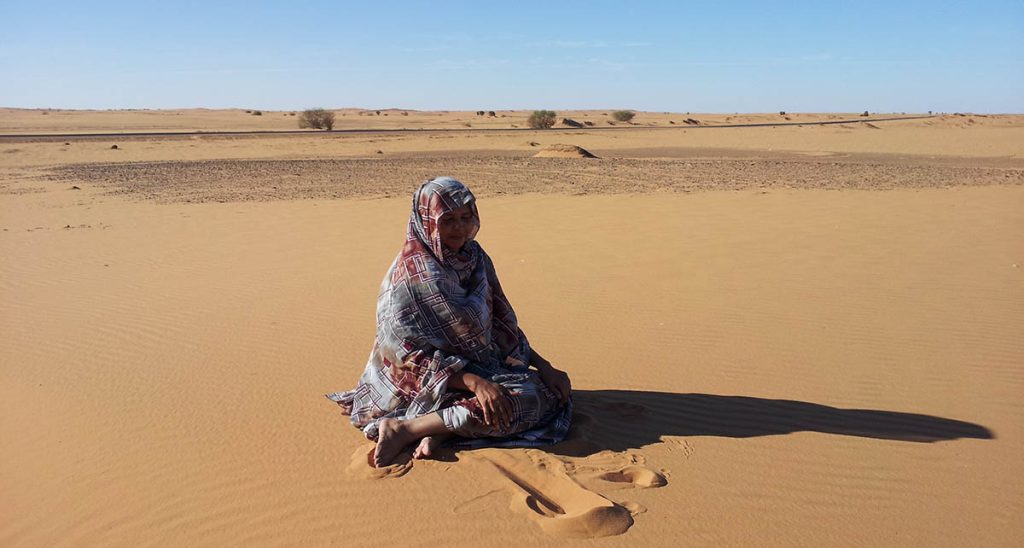
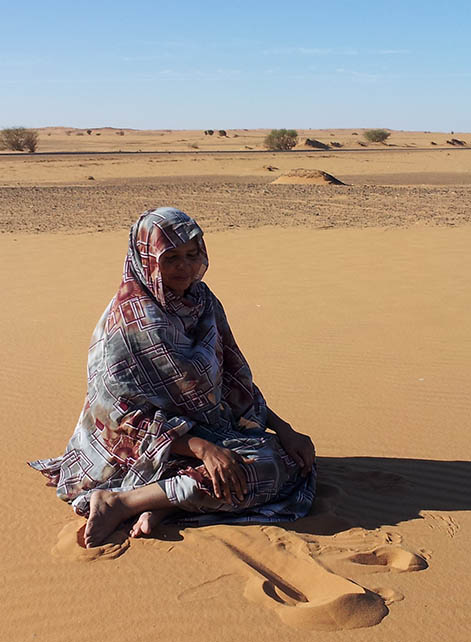
Professor Intisar Soghayroun el-Zein is a pioneering archaeologist, the first to study Islamic archaeology in Sudan. She is also the Minister of Higher Education in the Sudanese transitional government and a widely respected figure throughout the country.
Professor Soghayroun el-Zein studied at the American University in Cairo for her MA and subsequently for her Ph.D. Her doctoral thesis (1986) examined Islamic domed tombs in Sudan. Her research since then has advanced the study of Islamic archaeology in Sudan, through teaching at the University of Khartoum and co-directing international collaborative research. One example is the Meroë Archival Project, funded by the British Academy and was a partnership between the University of Khartoum, the University of Reading, and the National Corporation for Antiquities and Museums (NCAM). It re-examined the domestic excavations at the Royal City of Meroë to provide training for students at both universities, record the experiences of people who originally took part in the excavation, and provide a deeper understanding of social and economic life at Meroë.
In 2009 she was a visiting scholar at the Nile Basin Research Programme at the University of Bergen for six months in a research group on “Water and Culture”, bringing dynamism to the group. According to colleagues “she feels strongly about her discipline, but also for her colleagues, students and fellow Sudanese”. One of the attributes for which she was praised was her ability to bring “cross-disciplinary implications from history, anthropology, natural sciences to her work in archaeology”.
Professor Soghayroun el-Zein is best known for her work drawing attention to the under-studied archaeology of Islam in Sudan. Her research has demonstrated that the huge variety in the built environment in Sudan during the Islamic period is worthy of investigation and can add to the understanding of more recent Sudanese history. She is an advocate for expanding people’s knowledge of their own cultural heritage, without which remains from the past may be unintentionally destroyed.
Whenever her name is mentioned in Sudan people react with respect, both at the University of Khartoum, at the Museum, or in the Ministry. As Dean and a leader at Khartoum University, Professor Soghayroun el-Zein has always welcomed international scholars and made sure they meet as many Sudanese colleagues as possible. Her nomination is a recognition of both her scholarship and her activism. She has consistently advocated for the importance of cultural heritage and for the importance of education more generally.
Post by Lucy Moore
—
Intisar Soghayroun was born in Arbaji, Sudan, in 1958, two years after Sudan’s independence. Her birth coincided with a radical shift in the archaeology of the county. With independence, the archaeology of Sudan began to abandon a paradigm that justified colonial rule (and the looting of antiquities) by attributing the country’s ancient “buildings and monuments” to the work of foreigners, legitimizing the colonial regime by turning art and architecture into supporting evidence for the need for the civilizing influence of an outside power.[1] In 1959, the Egyptian government announced plans to construct the High Dam at Aswan. The project was designed to improve irrigation by regulating the flow of the Nile and generating power for industrial development. It would impound a vast reservoir stretching 200 kilometers south of the Sudan border, and the governments of Egypt and Sudan asked UNESCO to launch an appeal to Save the Monuments of Nubia. Another Trowelblazer, Christiane Desroches Noblecourt (1913-2011), coordinated the work of Egyptian authorities and foreign institutions and bullied Charles de Gaulle into paying for the relocation of Abu Simbel. (The relocation of Abu Simbel cost $42,000,000 in 1967—roughly $307,814,730 in 2017 dollars.) The campaign was enormous. And the survey helped scholars of Sudan to abandon the old-fashioned idea that history was the story of great migrations of separate peoples and examine the continuities of Nubian culture and history, and their complicated processes of change.
Intisar Soghayroun’s life, too, was tangled up with irrigation schemes. One hundred and forty-eight kilometers south of Khartoum, Arbaji sits in a loop of the Blue Nile, surrounded by the checkerboard geometry of the great Gezira Scheme’s green irrigated fields. (Her father was a hydrological engineer.) The Funj Chronicle credits a trader named Hijazi ibn Ma’in with founding the town in 1445 CE, but what remains there belongs to the Funj administrative center of the 16th-18th centuries: thick foundations of mud brick, two cemeteries with big redbrick qubbas (domed tombs), and the Darb al Jamal (‘Camel Road’), which runs through the town and was once a major caravan route connecting Sennar to the northern reaches of the Funj Kindom (Soghayroun 2010). Arbaji was a busy intersection of the seventeenth century. The Ottoman traveler Evliya Çelebi visited there in 1672. The Franciscan missionary Theodoro Krump passed through in June 1702, returning from Sennar with Father Antonio della Terza, who had contracted a fever near Gondar, Ethiopia. Travel was difficult; Father Antonio died in Arbaji; Krump fell into his grave (Spaulding 1974).
“I came into the discipline by chance,” Intisar Soghayroun told me. She entered the University of Khartoum in 1978, planning to study history after the example of her aunt. She found that she had a talent for archaeology; and, in 1982, she was awarded a BA with honors in archaeology and won a scholarship that allowed her to complete an MA at the American University in Cairo. Her thesis, The Islamic domed tombs of central Sudan, was based on ethnoarchaeological research in al-Khandaq in the Dongola Reach. After that, she returned to Sudan to take a Ph.D. at the University of Khartoum in Medieval and post-Medieval Archeology while writing a column for Sudan’s Sahara daily newspaper about life at the university and her observations traveling around the country.
Now one of Sudan’s most important archaeologists and a Professor at the University of Khartoum, Soghayroun has published numerous articles and chapters as well as four books on archaeology, including Islamic archaeology in the Sudan (2004) and Trade and Wadis System(s) in Muslim Sudan (2010). She has directed and co-directed fieldwork for archaeological surveys of the Third Cataract Region and Fifth Cataract Region, excavations of the royal city of Meroë north of Khartoum, the archaeological and cultural survey of the Dongola Reach, and the Al-Khandaq Town project. She also co-directs the Meroe Archival Project, which is re-examining excavations at the Royal City of Meroë, carried out by Peter and Margaret Shinnie.
Intisar Soghayroun has brought archaeology to a wide audience in Sudan. She is regularly sought out by Sudanese journalists for comment on archaeological findings and has presented on television documentaries about Islamic Archaeology and Architecture.
The image of Islamic Archaeology as mainly a way to obtain exotic museum pieces has meant that we know a great deal about the development of palaces, mosques, and metalwork during the early Islamic period in Sudan, she says, but very little about what people ate, what children played with, or how gender shaped everyday life (Soghayroun 2006). The idea that Sudanese Archaeology is a discipline mainly devoted to the recovery of ancient Nubian monuments neglects the work of archaeologists who have engaged contemporary Sudanese in conservation efforts. (Archaeologists in Sudan were confronted by this in the 1960s when UNESCO’s response to the threat to 3000-year-old temples eclipsed the plight of the 50,000 Nubians who were made homeless by Lake Nasser. Most were relocated to New Halfa in Khashm al-Girba, on the Atbara River, almost 1,000 kilometers from their homes; others resisted the resettlement scheme and remained beside Lake Nasser (see Dafalla 1975).) Intisar Soghayroun has helped to lead the discipline in Sudan away from the idea that Sudanese archaeology is mainly about ancient palaces and temples, pyramids, and the rise and fall of ancient royal lines. She has shown that it should be just as much about baking and weaving, children’s playthings, and engagement around stories about the past.
Her longest engagement has been an ethnoarchaeological study of the town of al-Khandaq, once the capital of one of the Funj mekdoms (17th-19th centuries) and the main port of call for Darfur and Kordofan caravans. In the 1820s, the town was an important river port and a center of Turco-Egyptian and, later, Anglo-Egyptian colonial rule. (Stone from old buildings was used to construct a police station in 1902.) Extending almost half a mile along the Nile, the walled town of one- and two-story houses was once a commercial hub with an indigo factory and a regular stop for sailing canteen boats and wood barges. The women of al-Khandaq were long famous for the food covers, baskets, mats, and hangings that they wove out of palm leaves and wheat stalks. By demonstrating the importance of their trade to the wadis systems that knitted together Sudan’s deserts and rivers, she has shown these women’s weaving is as truly historical as the campaigns of Ramesses II.
The town has been in decline since the late-1970s. In irrigation and agriculture as in dams and industry, the government had embarked on a series of colossal development schemes funded by foreign loans. Against a backdrop of a balance of payments crisis and IMF-ordered austerity plans merchants left al-Khandaq to seek out trade in Khartoum and Omdurman. Great stretches of the town are now uninhabited and slowly eroding—the Al-Rakubah newspaper described the fort as the “abandoned bride of the Nile.” The large quantities of animal dung deposited in the great mud-brick castle, the “Qaila Qaila” (the Red Fort), make it an attractive mine for fertilizer for the irrigated fields that cling to the riverside. Since beginning work in Khandaq, Intisar Soghayroun has collected oral histories and genealogies. And through these discussions about former residents, canteen boats that used to stop for sugar and coffee beans, and the lime-and-dung ovens that women make there, she has also involved the residents of al-Khandaq in the research, documentation, and protection of the town’s past.
Post by Brendan Tuttle
Sources
Intisar Soghayroun El-Zein
2010 Trade and Wadis System(s) in Muslim Sudan
2006 Women in the Archaeological Record: The Case of the Sudan.
2004 Islamic archaeology in the Sudan
Budge, A.E. Wallis. The Egyptian Sûdân, its history, and monuments, Vol. I, pp. 511-512. London: Keagan Paul.
Seligman, Charles G. 1930 The Races of Africa. Oxford: Oxford University Press.
Dafalla, Hassan. 1975 The Nubian Exodus. C. Hurst in association with the Scandinavian Institute of African Studies, Uppsala.
For James Bruces’ visit to Arbaji see Murray, Alexander. 1808. Account of the life and writings of James Bruce … author of Travels to discover the source of the Nile, in the years 1768, 1769, 1770, 1771, 1772, & 1773. Edinburgh: A. Constable and Company, pp. 413, 420, 429. [James Bruce (16 September 1772) reported that “Herbagi” (Arbaji) was captured in 1504 by “the Shilook,” and describes the Shilluk origins of the Funj (Murray 1808, pp. 413, 420, 429), other scholars suggested the Funj might have emerged from an isolated remnant of Meroitic society—a kind of kin to Holy Mountain in The Last Camel Died at Noon (Peters, 1991). For a reasoned summary, see Wendy James’s The Funj Mystique: Approaches to a problem of Sudan history (1977, In Text and Context. The Social Anthropology of Tradition. R. K. Jain, ed., pp. 95-133, Institute for the Study of Human Issues).]
For Krump’s visit to Arbaji see Krump, Theodoro and Spaulding, Jay (trans.) 1710 [1974] Hoher und Fruchtbarer Palm-Baum des Heiligen Evangelij (Augsburg: Georg Schulter & Martin Happach, 1710). The Sudanese Travels of Theodoro Krump. Jay Spaulding, trans, (available online, http://www.kean.edu/~jspauldi/krump2home.html).
[1] The conviction that Africans were incapable of building the impressive “temples, forts, palaces, monasteries” and other evidence of ancient “civilization” in Egypt and Sudan led early nineteenth-century scholars to attribute them to Phoenicians, Greeks, Egyptians (Budge, 1907, p.511-512), and even “pastoral ‘Europeans’” (Seligman, 1930, p.100). This view (the Hamitic Hypothesis, essentially) still surfaces periodically in places like the History Channel’s “Ancient Aliens,” which implies that extraterrestrials are more likely to have built the pyramids than Africans.
–
Photograph taken by Isabella Welsby Sjostrom and used with permission.