
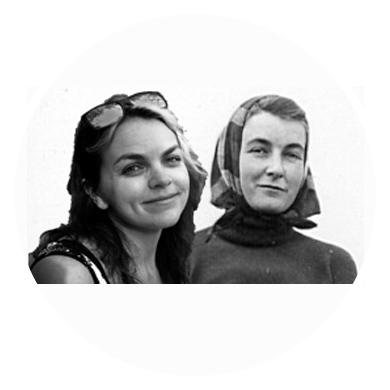
These Raising Horizons trowelblazers are connected through their explorations of archaeology, its practice and meanings across many different channels, from academic articles to artistic endeavours.
Jacquetta Hawkes and Dr Colleen Morgan

Jacquetta Hawkes, likely shown here at the excavation of Harristown Passage Tomb, County Waterford, Ireland, which she directed in 1939. Photographer unknown. Many thanks to Alison Cullingford, Special Collections Librarian at the University of Bradford, home to the Jacquetta Hawkes Archive, for supplying this photo. She also runs the blog Celebrating Jacquetta Hawkes.
Jacquetta Hawkes is not truly an unknown trowelblazer, having had obituaries in the broadsheets when she died in 1996, and contemporary ‘re-discoveries’ of her work. Yet given the breadth and vision of her oeuvre– a true antiquarian, according to one commenter–, it is surprising that she is not a more widely celebrated cultural figure today, as she was decades ago (listen to this radio programme on Jacquetta by her biographer Christine Finn).
Fittingly given her interdisciplinarity, Jacquetta’s background included an eminent scientist (her father, a Nobel prize winner) and poet (her cousin Gerard Manly Hopkins). She recalls a fascination with archaeology even as a child, digging in the garden under cover of darkness (and blistering her hand, something familiar to all novice trowelers). She was the first woman to enroll on Dorothy Garrod‘s new archaeology and anthropology course at Cambridge, and following her degree (first class), she was awarded a travelling scholarship and joined Garrod’s excavations at Mount Carmel, Palestine in 1932. This experience had a profound effect on her contemplative psyche, in particular her involvement in the excavation of a female Neanderthal skeleton, the first found outside Europe (working alongside Yusra who found the first tooth), and she wrote about how she felt deeply connected to this ancient woman.
Jacquetta’s primary archaeological career in terms of fieldwork and scholarly writing was before the 1950s. In 1939 she was elected a Fellow of the Society of Antiquaries (supported by Garrod), the same year she was directing a Neolithic excavation in Ireland, and published a book on the archaeology of Jersey. She had already worked on many different sites, including in collaboration with her first husband, Christopher.
Following WWII, she was recruited by the British government to turn her talents to yet another medium– television– in charge of the post-war reconstruction effort in “Visual Education”. She wanted to bring an aesthetic element, which included making a ground-breaking film on prehistory called The Beginning of History. In 1947 her importance to British culture was apparent, being on the UK Committee co-organising the first ever UNESCO conference in Mexico, 1947.
In 1949 she began to focus more fully on writing, having just published her only book of poetry, and went on to establish a role as a key national cultural figure. In particular she was archaeological advisor to the 1951 Festival of Britain, archaeology correspondent for the Sunday Times, and was involved in many other pursuits including scriptwriting and co-authoring plays with her second husband. She never lost touch with archaeology, even if she was never really part of academia, and became involved in the great debates of the 1960s with an article about the tensions between new scientific techniques and the intuitive, interpretive nature of archaeology. In 1971 she became Vice President of the Council for British Archaeology, and was still writing popular archaeological books into the 1980s.
Jacquetta’s most enduring creation was probably her first book, A Land, published in 1951 (republished in 2012). A bestseller, it merged Jacquetta’s passions- time, geology, history, archaeology, literature and a bodily-embedded consciousness, to explore the foundational interconnections between humans, other life and the physical world. It’s origins can be seen even in her journals as a 16 year old, recording a visit to watch a total eclipse in 1927, where she wanders the landscape, picking up and photographing baby birds in the grass, and noting a fossil-filled limestone wall.

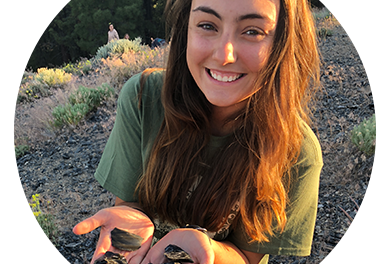
Dr Colleen Morgan; image used with permission.
If Jacquetta Hawkes had been around for the explosion of new technology in the digital age, and the debates about its applications to archaeology, you can be sure she would have extended her talents to exploring it- probably in the online world of blogging and social media.
Digital archaeology is where our 21st century counterpart, Dr Colleen Morgan, has followed her own creative path through archaeology and the many forms of the arts. Now a postdoctoral researcher at the Centre for Digital Heritage, University of York, she has crammed an astonishing amount of left-field thinking into her career already. Colleen’s undergraduate dissertation on Iron Age Japanese popular culture, feminism, and materiality points to her already diverse interests, and after working in the commercial/heritage sector, she undertook her PhD at Berkeley, University of California. Here Colleen’s exploratory work flourished under two trowelblazing supervisors (Meg Conkey and Ruth Tringham, whom she has written about for TrowelBlazers), and she focused on exploring digital media and archaeology via object biographies.



Dear Becky- I hope this finds you well,
I am writing my research paper for an MA in Fine Art – I am speaking about Jaquetta Hawkes and would like to quote you – please can you give me your full name so that I can cite you? I would love to come up to the archive at some point,
Thanks Claire lawrie
Dear Claire, hello — this is Brenna, responding from TrowelBlazers. Becky is Becky Wragg Sykes, and you can find her on twitter or you are welcome to email us directly at teamtrowelblazers [at] gmail . Best of luck with your paper.