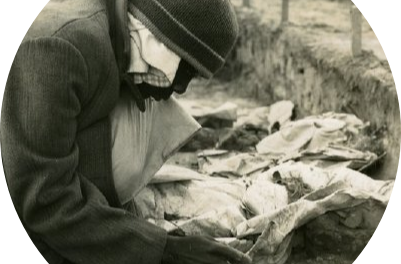
The incredible evolutionary explosion of weird and wonderful animals 500 million years ago has a special, trowelblazer-tastic history — have you heard of Helen, Helena and Mary Vaux Walcott, the Burgess Shale trowelblazers? If not, read this post! And that trowelblazing tradition continues to this day — which is why Fossil Hunter Lottie was just a tad excited to make her way to the University of Oxford and spend the day with Dr Allison Daley and learn all about her Cambrian Critters…
—
I am a palaeontologist working at Oxford University, in a joint position as Lecturer at the Zoology Department and Research Fellow at the Oxford University Museum of Natural History. My research looks at early animal fossils that are over 500 million years old, to help understand how arthropods first evolved.
Arthropods – a group of animals that today includes lobsters, spiders, insects, and centipedes – have an incredible early fossil record, where soft parts such as eyes, skin, muscles, guts and brains are preserved. The amazing preservation and abundance of fossils has lead to this period in time being called the “Cambrian Explosion”, which records the first steps in animal evolution.
These fossils reveal how arthropods developed their characteristic body features, such as jointed limbs and their exoskeleton. I use phylogenetic analyses, statistics and a variety of descriptive techniques to study the evolution and ecology of fossils from numerous Cambrian Explosion localities around the world, including the Burgess Shale (Canada), Emu Bay Shale (Australia) and Chengjiang Biota (China).

Lottie checks out my office in the Zoology Department and has a look at some photos of Anomalocaris canadensis from the Burgess Shale on my computer.

Lottie joins in on my meeting with Paul Smith, Director of the Oxford University Museum of Natural History

Lottie arrives to the Oxford University Museum of Natural History on a very windy day!

Lottie checks out the OUMNH and admires our T. rex and Iguanodon skeletons

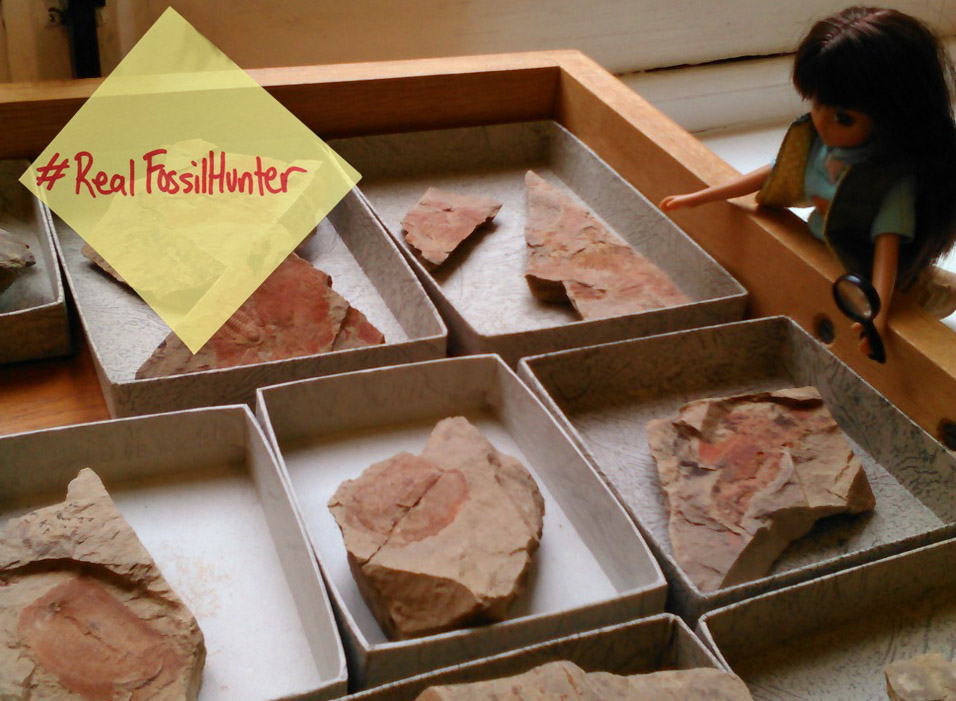
Lottie examines some Cambrian trilobite and early arthropod fossils from the Emu Bay Shale in Australia
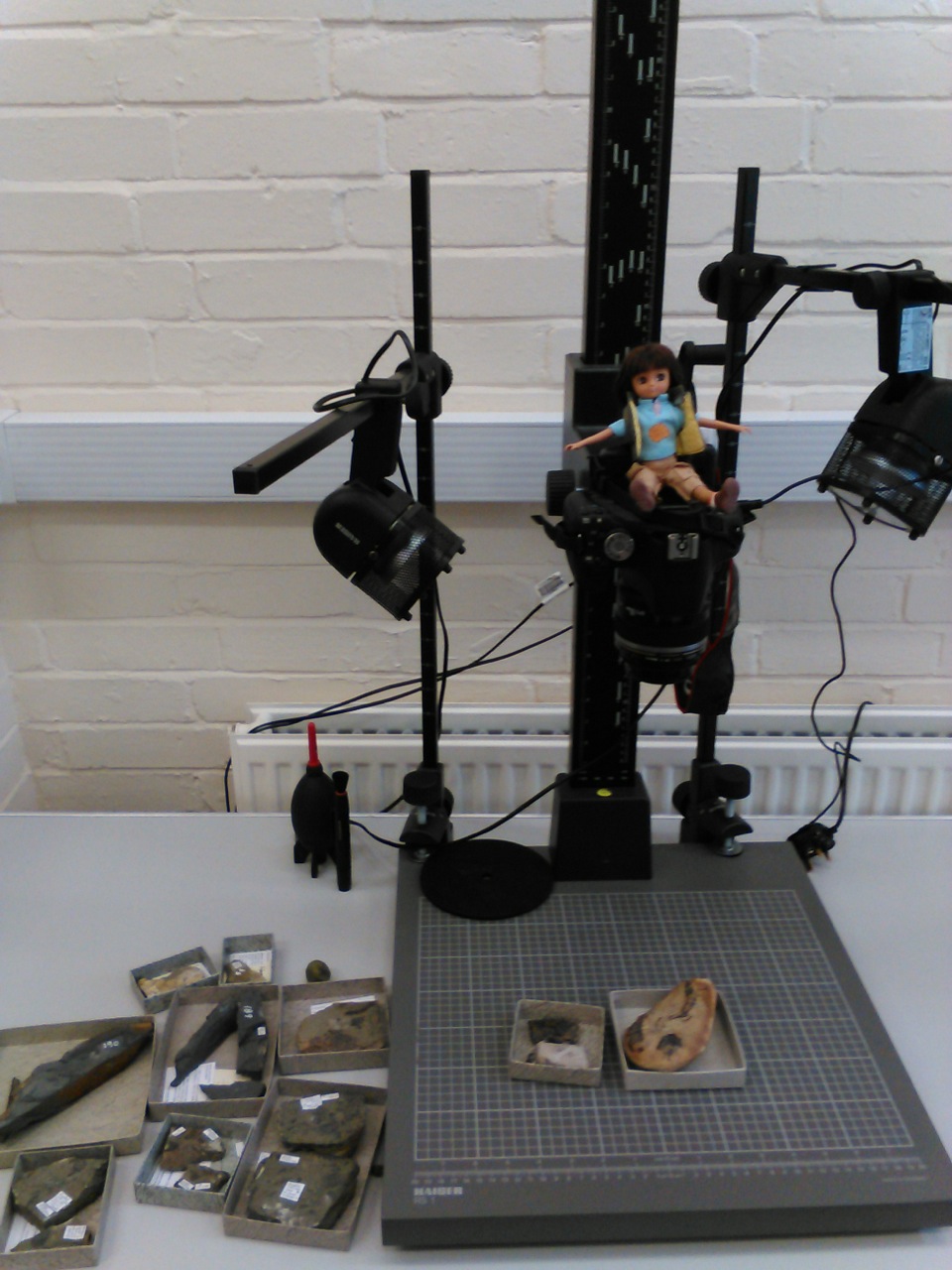
Lottie gives me a hand taking some photographs of various fossils from the OUMNH collections
—
written by Allison Daley (@CambrianCritter). All photos (c) Allison Daley.