

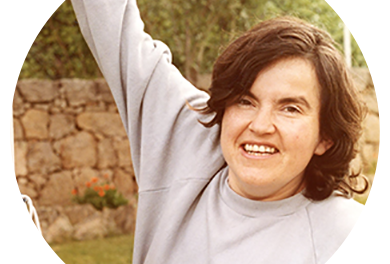
Dr Shadia Taha (Shadia) is the first heritage specialist in Sudan to move away from heritage as tangible monuments to a concern with heritage as being about people, feelings and experiences. Her fieldwork has accordingly paid substantial attention to people, their opinions, what matters to them, and what they value most. She is the first Sudanese archaeologist to live with the community she studied in Eastern Sudan, using a range of anthropological techniques such as interviews, observation, and participant observation.
Shadia was born in Sudan and lived there until 1979, when she left to study at Cambridge. She subsequently lived in Saudi Arabia and Kuwait until 1990, when she returned to Cambridge and where she has been based ever since. Shadia has extensive practical, research, family, and emotional connection with the continent. She has especially worked on Sudanese archaeology doing case study work in Suakin (e.g. Taha 2013) and working with nomadic tribes in the hinterland. She is an excellent field worker, and her insights into the formation and meanings of heritage in its many forms will, surely, be of future significance for archaeological practices and community involvement in Sudan.
Suakin, a port town on the Red Sea, has always been presented in the academic literature as an ancient place and acclaimed for its past success and beautiful architecture. Such approaches were occupied with a lost former place, and the community who still lives in Suakin has been ignored. Shadia’s work in Suakin, which focused on both tangible and intangible aspects of the heritage tradition of the place, argued that Suakin is a living heritage, not an ancient past, for example argued in her publication “Attachment to Abandoned Heritage; Shrine Visiting as Heritage; A Life shaped by the Sea and The Value of Memory (2009).
Shadia’s work has also responded to how, during the 19th and 20th centuries, colonial interpretations attributed past advancement and achievements in Sudan to foreigners, texts that are still referenced and re-referenced. Shadia has introduced an approach that (re)interprets Sudanese Heritage from a native perspective. For instance, her work with the nomads sheds new light on their routes, their journeys, their experiences and contribution in the past and the present. This she reflects on in the forthcoming chapter “Between the desert and the sea: connected landscape”, in which she argues that Suakin’s success would not have been possible without the contribution of the nomads, the hinterland, and the internal government.

Dr. Shadia Taha conducting an interview in Zanzibar, 2019.
Shadia, realizing that Sudan’s ancient civilization is not well known outside the region, decided to present this heritage through YouTube videos, creating the channel Sudan’s Splendid Heritage. These are short, concise, free-of-jargon presentations that aim at the general public, including young Sudanese who live in diaspora as well in Sudan. Through these outputs she seeks to reach more people using a media that is familiar.
Shadia has consistently been concerned with promoting Africa and African archaeology. For several years she has been promoting African Archaeology in various national and international contexts, including being one of the founders of the African Archaeology Group at the University of Cambridge, UK, and one of the organizers of the group’s activities from 2007–2018.
Her work has throughout been informed by her critical concerns with sustainable development, gender aspects of heritage, and the significance of intangible heritage as part of identity-giving traditional practices.
Further details of her work and commitment to African archaeology can be found on her websites:
https://sites.google.com/view/shadiataha
https://www.wolfson.cam.ac.uk/people/shadia-taha
YouTube: Sudan’s Splendid Heritage
—
Post by Marie Louise Stig Sørensen
Images provided by Shadia Taha and Marie Louise Stig Sørensen and used with permission.




I am confident that Dr. Shadia, a specialist in the archaeology and heritage of Sudan, will be a great addition to this site. Her work, including her YouTube channel, and approach to the subject are important to drawing more attention to this field.